

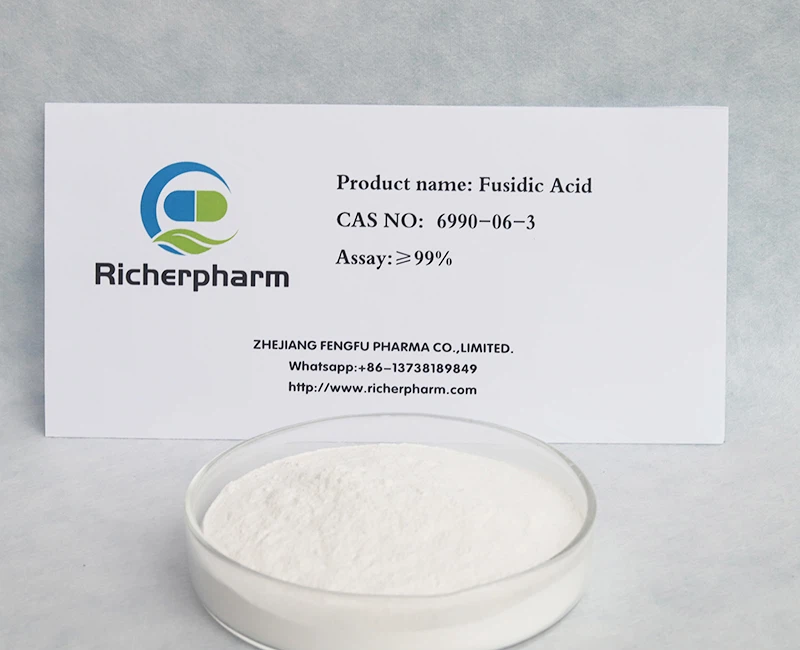
Why Choose Us?
One-stop solution
Zhejiang Fengfu Pharma Co.,Limited engaged in the development, production and marketing of pharmaceutical products, food ingredients, vitamins, intermediates and chemicals.
Rich experience
Fengfu Pharma,headquartered in Hangzhou, China, with 3 production bases in Shandong, Zhejiang and Hebei separately, which have many years of experience in the production of APIs, vitamins and chemical products. These facilities have been certified GMP, ISO, FAMI-QS, KOSHER, HALAL, etc.
High quality
We have complete control over our product development, design, and manufacturing processes, thanks to our advanced equipment, methods, and inspection facilities.
High quality service
Our goal is to provide you with quality products and professional services for mutual benefit. We are also willing to work with partners around the world to create a better future together.
Fusidic acid is also sometimes known as sodium fusidate.
Fusidic acid is an antibiotic. It works by stopping bacteria from growing.
It's used to treat bacterial infections, such as skin infections including cellulitis and impetigo, and eye infections including conjunctivitis (red, itchy eyes).
Fusidic acid is only available on prescription. It comes as a cream, ointment, or eye drops. It's also available with a steroid as a combined cream.
It's also given by injection, as a liquid you swallow, or as tablets, but these are usually only used in hospital.

Product: Upadacitinib CAS 1310726-60-3
Another Name: Upadacitinib; ABT-494; ABT-494 (Upadacitinib) free base; ABT-494 (Upadacitinib);
Chemical Name: (3S,4R)-3-Ethyl-4-(3H-imidazo[1,2-a]pyrrolo[2,3-e]pyrazin-8-yl)-N-(2,2,2-trifluoroethyl)-1-pyrrolidinecarboxamide
Molecular formula: C17H19F3N6O

Product: Ruxolitinib CAS 941678-49-5
Alternative Names: INCB018424; Ruxolitinib; Ruxolitinib Phosphate API; Ruxolitinib API; Ruxolitinib Intermediates;
Chemical Name: (3R)-3-Cyclopentyl-3-[4-(7H-pyrrolo[2,3-d]pyrimidin-4-yl)-1H-pyrazol-1-yl]propanenitrile
Molecular formula: 306.37
Molecular mass: C17H18N6
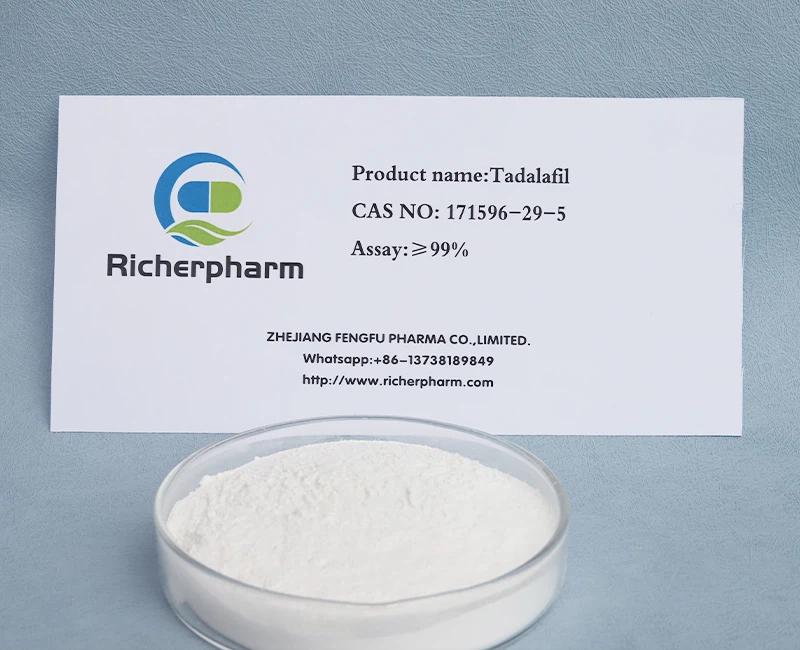
Product: Tadalafil CAS 171596-29-5
Alternative Names: Tadalafil API; Cialis Tadalafil API; Adcirca API; CAS 171596-29-5; 171596-29-5; IC 351; ICOS351; Cialis 98%; Tildenafil; UK 336017;
Chemical Name: (6R,12aR)-6-(1,3-Benzodioxol-5-yl)-2,3,6,7,12,12a-hexahydro-2-methylpyrazino[1',2':1,6]pyrido[3,4-b]indole-1,4-dione
Molecular formula: C22H19N3O4
Molecular mass: 389.41

Lidocaine Hydrochloride CAS 6108-05-0
Product: Lidocaine hydrochloride CAS 6108-05-0
Alternative Names: Lidocaine Hydrochloride Monohydrate; Lidocaine hydrochloride anhydrous; Lidocaine; Lidocaine HCl; Lignocaine Hydrochloride; Lignocaine HCl; 6108-05-0; 137-58-6;
Chemical Name: 2-Dimethylamino-N-(2,6-dimethylphenyl)acetamide hydrochloride
Molecular formula: C14H25ClN2O2
Molecular mass: 288.814

Ropivacaine Hydrochloride CAS 132112-35-7
Product: Ropivacaine hydrochloride CAS 132112-35-7
Alternative Names: Ropivacaine HCl; Ropivacaine Hydrochloride Monohydrate; Naropin API; Ropivacaine Monohydrochloride; 132112-35-7;
Molecular formula: C17H26N2O.ClH.H2O
Molecular mass: 328.88
CAS No.: 132112-35-7

Prilocaine Hydrochloride CAS 1786-81-8
Product: Prilocaine hydrochloride CAS 1786-81-8
Alternative Names: Prilocaine Hydrochloride; Prilocaine; Prilocaine HCl; Citanest API; Prilocaine Monohydrochloride; 721-50-6; 1786-81-8;
Chemical Name: 2-(Propylamino)-o-propionotoluidide hydrochloride;
Molecular formula: C13H21ClN2O

Pramoxine Hydrochloride CAS 637-58-1
Product: Pramoxine hydrochloride CAS 637-58-1
Alternative Names: Pramoxine HCL API; Pramoxine Hydrochloride 637-58-1; Pramoxine Hydrochloride (1554002); Pumocaine hydrochloride; Plamoxine hydrochloride; Pramoxine Monohydrochloride; Pramoxine Hydrochloride Monohydrate; 637-58-1;

Bupivacaine Hydrochloride CAS 73360-54-0
Product: Bupivacaine Hydrochloride CAS 73360-54-0
Alternative Names: Bupivacaine HCl hydrate; bupivacaine hydrochloride hydrate; Bupivacaine; 2180-92-9; Bupivacaine HCl; Bupivacaine Hydrochloride Monohydrate; Marcaine; Sensorcaine; Bupivacaine Monohydrochloride;

Articaine Hydrochloride CAS 23964-57-0
Product: Articaine hydrochloride CAS 23964-57-0
Alternative Names: Articaine HCl; Carticaine hydrochloride; Septocaine; Articaine Hydrochloride Monohydrate; Septocaine; 23964-57-0;
Chemical Name: 4-methyl-3-[[(1-oxo-2-(propylamino)propyl)amino]methyl]benzoic acid hydrochloride
Fusidic acid is an antibiotic with both hydrophilic and lipophilic properties, so it penetrates very well into the skin, reaching the deep layers of the skin and is present in all layers of skin and subcutaneous tissue. The drug works by preventing the growth of bacteria that cause an infection.
Sodium fusidate is a fusidic acid salt and works by a similar mechanism. Topical fusidic acid is suitable for superficial and deep skin infections. Fusidic acid is indicated for the treatment of skin infections caused by viral or staphylococcal infections, streptococci and other microorganisms sensitive to fusidic acid. Fusidic acid cream or sodium fusidate ointment are antibiotics that work to clear up infections on the surface of the skin quickly, especially in small areas of infection. If the skin infection is more extensive, antibiotic tablets or liquid medication may be indicated.
Skin diseases often treated with topical fusidic acid such as discoid eczema, stasis eczema, seborrheic dermatitis, atopic dermatitis, contact dermatitis, chronic lichen simplex, skin psoriasis, sunburned skin, discoid lupus erythematosus. In addition, topical fusidic acid is also indicated in the treatment of conditions such as impetigo, folliculitis, folliculitis, superficial wounds, fungal diseases caused by Corynebacterium minutissimum, boils, traumatic or postoperative wounds, burns , boils, inflammation of the sweat glands, sores caused by varicose veins, inflammation around the nail and common acne.
Use the preparation exactly as your doctor tells you to. Apply a thin layer of cream/ointment to the infected area and rub it in gently. Unless you have been told otherwise, use it 3-4 times a day. Remember to wash your hands well after you have finished using it (unless you are using it to treat your hands).
Only use it for as long as your doctor has instructed you to. A course of treatment typically lasts for around seven days. You should not use the cream or ointment for longer than 10 days.
Your skin should start to improve after a few days of treatment. If you think the treatment is not working after this time you should let your doctor know. Sometimes an infection can be resistant to a particular antibiotic and an alternative antibiotic is needed. Likewise, if the infection has not gone by the time you have completed the course of treatment, make another appointment to see your doctor.
Many skin infections are contagious and can be passed on by touching. To help reduce the risk of this, try to avoid touching the infected area other than when applying the preparation, and use separate towels and facecloths to those used by other members of your family.
If you are using the preparation near your face, be careful not to get it into your eyes. If this does happen, rinse it off with plenty of warm water.
In deciding to use a medicine, the risks of taking the medicine must be weighed against the good it will do. This is a decision you and your doctor will make. For this medicine, the following should be considered:
Allergies
Tell your doctor if you have ever had any unusual or allergic reaction to this medicine or any other medicines. Also tell your health care professional if you have any other types of allergies, such as to foods, dyes, preservatives, or animals. For non-prescription products, read the label or package ingredients carefully.
Breast Feeding
There are no adequate studies in women for determining infant risk when using this medication during breastfeeding. Weigh the potential benefits against the potential risks before taking this medication while breastfeeding.
Interactions with Medicines
Although certain medicines should not be used together at all, in other cases two different medicines may be used together even if an interaction might occur. In these cases, your doctor may want to change the dose, or other precautions may be necessary. When you are taking this medicine, it is especially important that your healthcare professional know if you are taking any of the medicines listed below. The following interactions have been selected on the basis of their potential significance and are not necessarily all-inclusive.
Using this medicine with any of the following medicines is usually not recommended, but may be required in some cases. If both medicines are prescribed together, your doctor may change the dose or how often you use one or both of the medicines.
● Atorvastatin
● Cholera Vaccine, Live
● Methotrexate
● Pravastatin
● Ritonavir
● Saquinavir
● Simvastatin
Interactions with Food/Tobacco/Alcohol
Certain medicines should not be used at or around the time of eating food or eating certain types of food since interactions may occur. Using alcohol or tobacco with certain medicines may also cause interactions to occur. Discuss with your healthcare professional the use of your medicine with food, alcohol, or tobacco.
Other Medical Problems
The presence of other medical problems may affect the use of this medicine. Make sure you tell your doctor if you have any other medical problems, especially:
● Liver disease-May be worsened by fusidic acid
Fusidic acid belongs to a class of medications known as antibiotics. It is used to treat various skin infections caused by certain kinds of bacteria. Such infections may include impetigo and secondary infections (infections that develop after the skin has been injured) to burns or broken skin.
This medication may be available under multiple brand names and/or in several different forms. Any specific brand name of this medication may not be available in all of the forms or approved for all of the conditions discussed here. As well, some forms of this medication may not be used for all of the conditions discussed here.
Your doctor may have suggested this medication for conditions other than those listed in these drug information articles. If you have not discussed this with your doctor or are not sure why you are being given this medication, speak to your doctor. Do not stop using this medication without consulting your doctor.
Do not give this medication to anyone else, even if they have the same symptoms as you do. It can be harmful for people to use this medication if their doctor has not prescribed it.
Fusidic acid is active in vitro against Staphylococcus aureus, most coagulase-positive staphylococci, Beta-hemolytic streptococci, Corynebacterium species, and most clostridium species.[medical citation needed] Fusidic acid has no known useful activity against enterococci or most Gram-negative bacteria (except Neisseria, Moraxella, Legionella pneumophila, and Bacteroides fragilis).[medical citation needed] Fusidic acid is active in vitro and clinically against Mycobacterium leprae but has only marginal activity against Mycobacterium tuberculosis.
One use of fusidic acid is its activity against methicillin-resistant Staphylococcus aureus (MRSA).Although many strains of MRSA remain sensitive to fusidic acid, there is a low genetic barrier to drug resistance (a single point mutation is all that is required), fusidic acid should never be used on its own to treat serious MRSA infection and should be combined with another antimicrobial such as rifampicin when administering oral or topical dosing regimens approved in Europe, Canada, and elsewhere.[medical citation needed] However, resistance selection is low when pathogens are challenged at high drug exposure.
Topical fusidic acid is occasionally used as a treatment for acne vulgaris. As a treatment for acne, fusidic acid is often partially effective at improving acne symptoms. However, research studies have indicated that fusidic acid is not as highly active against Cutibacterium acnes as many other antibiotics that are commonly used as acne treatments. Fusidic acid is also found in several additional topical skin and eye preparations, although its use for these purposes is controversial.
Fusidic Acid CAS 6990-06-3 Storage
Direct contact with heat, air and light may damage your medicines. The exposure of medicine may cause some harmful effects. The medicine must be kept in a safe place and out of children's reach.
Mainly the drug should be kept at room temperature between 68ºF and 77ºF (20ºC and 25ºC).
Before taking fusidic acid consult your Doctor. In case if you face any problems or get any side effects after taking fusidic acid rush immediately to your nearby hospital or consult your doctor for better treatment. Carry your medications always in your bag while travelling to avoid any immediate emergencies. Follow your prescription and follow your Doctor advice whenever you take fusidic acid.
● Tell all of your health care providers that you take this drug. This includes your doctors, nurses, pharmacists, and dentists.
● Do not use this drug to treat acne, rosacea, or a rash around the mouth.
● Do not use longer than you have been told. A second infection may happen.
● Use care when using on a large part of the skin. Talk with the doctor.
● Use of other skin products while using this drug may cause more irritation.
● Talk with your doctor before you use other drugs or products on your skin. This includes soaps.
● If the patient is a child, use this drug with care. The risk of some side effects may be higher in children.
● This drug may affect growth in children and teens in some cases. They may need regular growth checks. Talk with the doctor.
● Tell your doctor if you are pregnant, plan on getting pregnant, or are breast-feeding. You will need to talk about the benefits and risks to you and the baby.
● If you are breast-feeding, avoid putting this drug on your breast.
Our Factory
Zhejiang Fengfu Pharma Co.,Limited engaged in the development, production and marketing of pharmaceutical products, food ingredients, vitamins, intermediates and chemicals.
Fengfu Pharma,headquartered in Hangzhou, China, with 3 production bases in Shandong, Zhejiang and Hebei separately, which have many years of experience in the production of APIs, vitamins and chemical products. These facilities have been certified GMP, ISO, FAMI-QS, KOSHER, HALAL, etc. We have complete control over our product development, design, and manufacturing processes, thanks to our advanced equipment, methods, and inspection facilities.
With key competencies in pharmaceuticals and food health, Fengfu Pharma has established extensive business networks around the world. We have Strategic Marketing Partners respectively in Mumbai and Dubai. We are ready to provide you with our best products and services.
Our goal is to provide you with quality products and professional services for mutual benefit. We are also willing to work with partners around the world to create a better future together.

FAQ
Hot Tags: fusidic acid cas 6990-06-3, China fusidic acid cas 6990-06-3 manufacturers, suppliers, factory, antibiotics api for working together on cost reduction with suppliers, antibiotics api for jointly developing new products with suppliers, antibiotics api for partnering on market expansion with suppliers


