Ropivacaine hydrochloride CAS 132112-35-7, is an amide-type long-acting local anesthetic drug. It has higher lipid solubility than lidocaine but lower than bupivacaine. Its anesthetic potency is 8 times that of procaine. Due to its metabolites in liver metabolism, it has a prolonged effect. It is primarily used for regional nerve blockade anesthesia and epidural anesthesia and is also used for postoperative and labor analgesia.
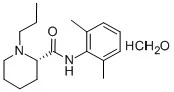
Alternative Names: Ropivacaine HCl; Ropivacaine Hydrochloride Monohydrate; Naropin API; Ropivacaine Monohydrochloride; 132112-35-7;
Molecular formula: C17H26N2O.ClH.H2O
Molecular mass: 328.88
CAS No.: 132112-35-7
MDL Number: MFCD00946578
EINECS Number: 663-286-1
Biological activity: Ropivacaine HCl (LEA-103) is an anesthetic agent that works by reversibly inhibiting the influx of sodium ions to block the conduction of impulses in nerve fibers.
Ropivacaine hydrochloride is used for the following purposes:
- Surgical anesthesia
- Epidural anesthesia, including for cesarean section
- Spinal anesthesia
- Regional nerve blockade for acute pain control
- Continuous epidural infusion or intermittent single-dose administration for postoperative or vaginal delivery analgesia
- Regional nerve blockade
1. Payment term
TT, LC
2. Delivery date
Negotiable
3. Market
Middle East / Africa / Asia / South America / Europe
4. Sample
Available
5. Executive standards
EP/USP/JP
6. Qualification certificate
Registration "A" status of raw material packaging, Notification of Approval of marketing
7. Packaging size specification
Inner package: single-layer polyethylene bag and aluminum foil bag.
Outer package: fiber drum.
Packaging size: 25 kg/drum.
Our Advantage
We have branch offices in Dubai and India
we have own reliable & Long-term cooperative & experienced factory
Variety products for selection from China and India
We can customize according to your requirements
We can do OEM & ODM
We can offer N-1 to API
Ropivacaine hydrochloride CAS 132112-35-7 API FAQ
Q: What is ropivacaine hydrochloride used for?
Q: What is the CAS of ropivacaine hydrochloride?
Q: What is the generic name for ropivacaine?
Q: What is the clinical use of ropivacaine?
Q: What kind of drug is ropivacaine?
Q: Is ropivacaine stronger than lidocaine?
Q: What is the difference between lidocaine and ropivacaine?
Q: How long is ropivacaine local anesthetic?
Q: What is the strongest anesthetic?
Q: How does ropivacaine compare to other local anesthetics?
Hot Tags: ropivacaine hydrochloride cas 132112-35-7, China ropivacaine hydrochloride cas 132112-35-7 manufacturers, suppliers, factory, intermediate esters, intermediate nitriles, dye intermediates, intermediate products, api for human interaction data, intermediate halides