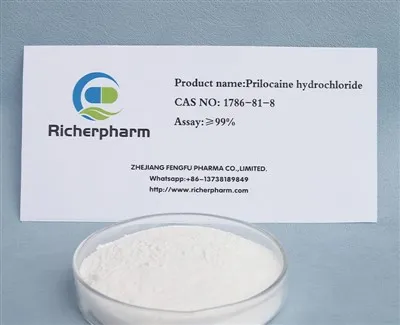
Lidocaine hydrochloride, with CAS number 6108-05-0, a white crystalline powder. The formula is C14H25ClN2O2, It is easily soluble in water, ethanol and organic solvents. It is a pharmaceutical compound that belongs to the class of local anesthetics. Commonly available in injectable, ointment, and gel formulations.
Lidocaine hydrochloride is the hydrochloride salt form of lidocaine, a medication used for its anesthetic and analgesic properties. It acts by blocking nerve signals in a specific area, numbing the region and reducing pain sensations.

Alternative Names: Lidocaine Hydrochloride Monohydrate; Lidocaine hydrochloride anhydrous; Lidocaine; Lidocaine HCl; Lignocaine Hydrochloride; Lignocaine HCl; 6108-05-0; 137-58-6;
Chemical Name: 2-Dimethylamino-N-(2,6-dimethylphenyl)acetamide hydrochloride
Molecular formula: C14H25ClN2O2
Molecular mass: 288.814
CAS No.: 6108-05-0
MDL Number: MFCD00150329
It is used for infiltration anesthesia, epidural anesthesia, surface anesthesia, and nerve conduction blockade. It belongs to class I and class III antiarrhythmic drugs and can be used for ventricular premature beats and ventricular tachycardia after acute myocardial infarction. It can also be used for digitalis toxicity, cardiac surgery, and ventricular arrhythmias induced by cardiac catheterization. Additionally, it is used for local infiltration anesthesia in proctology and surgical incision sites, as well as for surgical anesthesia and postoperative analgesia.
1. Payment term
TT, LC
2. Delivery date
Negotiable
3. Market
Middle East / Africa / Asia / South America / Europe
4. Sample
Available
5. Executive standards
EP/USP/JP
6. Qualification certificate
Registration "A" status of raw material packaging, Notification of Approval of marketing
7. Packaging size specification
Inner package: single-layer polyethylene bag and aluminum foil bag.
Outer package: fiber drum.
Packaging size: 25 kg/drum.
Our Advantage
We have branch offices in Dubai and India
we have own reliable & Long-term cooperative & experienced factory
Variety products for selection from China and India
We can customize according to your requirements
We can do OEM & ODM
We can offer N-1 to API
Lidocaine hydrochloride CAS 6108-05-0 API FAQ
Q: What is lidocaine hydrochloride used for?
Q: Why is lidocaine hydrochloride used more than lidocaine?
Q: Is lidocaine hydrochloride a narcotic?
Q: Is it safe to use lidocaine hydrochloride?
Q: How long does lidocaine hydrochloride stay in your system?
Q: Can lidocaine make you sleepy?
Q: Is lidocaine a good painkiller?
Q: Who should not use lidocaine?
Hot Tags: lidocaine hydrochloride cas 6108-05-0, China lidocaine hydrochloride cas 6108-05-0 manufacturers, suppliers, factory, human api for financial institutions, api for human social media data, chemical intermediates, api for human nutrition data, intermediate ketones, technical grade intermediates