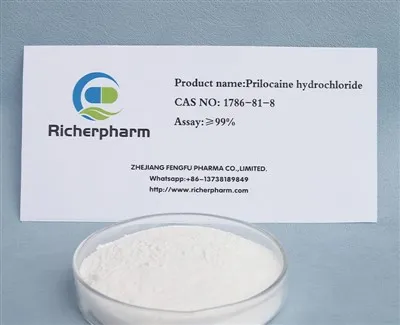
Articaine hydrochloride CAS 23964-57-0 is a local anesthetic medication that is commonly used for dental procedures. It belongs to the amide group of local anesthetics and is known for its fast onset and relatively long duration of action. Articaine hydrochloride is used to provide local anesthesia by blocking nerve signals in the area where it is administered, thus numbing the surrounding tissues and preventing pain during dental treatments.
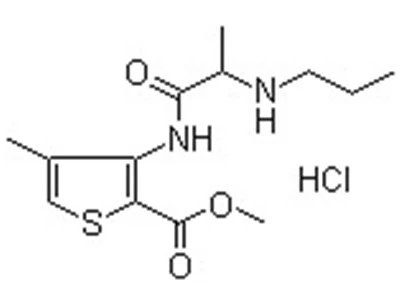
Alternative Names: Articaine HCl; Carticaine hydrochloride; Septocaine; Articaine Hydrochloride Monohydrate; Septocaine; 23964-57-0;
Chemical Name: 4-methyl-3-[[(1-oxo-2-(propylamino)propyl)amino]methyl]benzoic acid hydrochloride
Molecular formula: C13H21ClN2O3S
Molecular mass: 320.8354
CAS No.: 23964-57-0
EINECS Number: 245-957-7
Here are the common applications of Articaine hydrochloride:
1. Dental Anesthesia: Articaine hydrochloride is primarily used for dental anesthesia, including infiltration anesthesia and nerve block anesthesia. It is administered by injection to numb the specific area in and around the oral cavity, providing pain relief during dental procedures such as tooth extraction, root canal treatment, and dental implants. Articaine hydrochloride is favored in dentistry due to its rapid onset and ability to penetrate soft tissues effectively.
2. Maxillofacial and Oral Surgery: Articaine hydrochloride is widely used in maxillofacial and oral surgery procedures. It can provide profound anesthesia for complex surgical interventions, including wisdom tooth extraction, orthognathic surgery, and other procedures that involve the soft tissues and bones of the face and jaw.
3. Periodontal Procedures: Articaine hydrochloride is also used in periodontal procedures, which involve the treatment of gum diseases and related conditions. It helps in achieving local anesthesia for scaling and root planing, gingival surgeries, and other periodontal interventions.
4. Pediatric Dentistry: Articaine hydrochloride is often preferred for pediatric dental procedures due to its effectiveness and reduced injection discomfort. It allows for better pain control in children undergoing dental treatments, ensuring a more comfortable experience.
5. Regional Anesthesia: Articaine hydrochloride can be used for regional anesthesia, such as peripheral nerve blocks, to provide localized anesthesia and pain relief for surgeries or interventions in specific regions of the body.
1. Payment term
TT, LC
2. Delivery date
Negotiable
3. Market
Middle East / Africa / Asia / South America / Europe
4. Sample
Available
5. Executive standards
EP/USP/JP
6. Qualification certificate
Registration "A" status of raw material packaging, Notification of Approval of marketing
7. Packaging size specification
Inner package: single-layer polyethylene bag and aluminum foil bag.
Outer package: fiber drum.
Packaging size: 25 kg/drum.
Our Advantage
We have branch offices in Dubai and India
we have own reliable & Long-term cooperative & experienced factory
Variety products for selection from China and India
We can customize according to your requirements
We can do OEM & ODM
We can offer N-1 to API
Prilocaine hydrochloride CAS 1786-81-8 API FAQ
Q: What is the onset time of Articaine hydrochloride?
Q: How long does the anesthesia provided by Articaine hydrochloride last?
Q: Is Articaine hydrochloride safe to use?
Q: Can Articaine hydrochloride be used in pediatric patients?
Q: Are there any contraindications or precautions associated with Articaine hydrochloride?
Q: Can Articaine hydrochloride cause any side effects?
Hot Tags: articaine hydrochloride cas 23964-57-0, China articaine hydrochloride cas 23964-57-0 manufacturers, suppliers, factory, intermediate purification products, intermediate substances, api for human data access, api for gathering human data, api for human genetic data, intermediate heterocyclic compounds