Sodium Fusidate is a kind of antibiotic product for curing infections caused by sensitive bacteria especially staphylococci, such as carious osteitis, blood poisoning, encarditis, repeated infected cystic fibrosis, pneumonia, cutaneo-infection & soft tissue infection, surgery infection & wound infection.
|
Item |
Standard Regulation |
Test Result |
|
|
Appearance |
Appearance |
White or almost white, crystalline powder |
White crystalline powder |
|
Impurity |
M |
≤1.0% |
0.14% |
|
G |
≤0.7% |
0.13% |
|
|
L |
≤0.5% |
Not detected |
|
|
B |
≤0.4% |
Not detected |
|
|
A |
≤0.3% |
Not detected |
|
|
H |
≤0.10% |
Not detected |
|
|
C |
≤0.2% |
Not detected |
|
|
D |
≤0.2% |
Not detected |
|
|
F |
≤0.2% |
Not detected |
|
|
I |
≤0.2% |
Not detected |
|
|
K |
≤0.2% |
Not detected |
|
|
N |
≤0.2% |
Not detected |
|
|
Main unspecified impurities |
≤0.10% |
Not detected |
|
|
Total impurities |
≤2.0% |
0.27% |
|
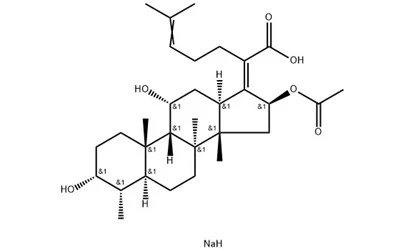
Chemical Name: Fusidate De Sodium; Fusidato De Sodio; Fuzydyt Alsudium; Natriy Fuzidat; 751-94-0; Fucidina; Fucidine; Fusidatesodium; Fusidin; Fusin; Intertullefucidin; Sodium fusidate reference substance;
CAS No.: 751-94-0
Physical characteristics: A white crystalline powder, and the solvent is a colorless clear liquid.
Molecular formula: C31H47NaO6
Molecular mass: 538.70
MDL Number: MFCD09054714
Sodium fusidate is obtained by extracting fusidic acid from the fermentation broth of fusidium coccineum, and then salting it with sodium hydroxide. It is a narrow-spectrum and highly effective antibiotic against Gram-positive bacteria widely used abroad. Sodium fusidate has a bactericidal effect by inhibiting bacterial protein synthesis and has a potent antibacterial effect against a range of Gram-positive bacteria. It has been paid more and more attention to maintain strong antibacterial activity and low resistance rate against the vast majority of staphylococcal strains, and has become a new choice for resistant staphylococcus aureus.
Sodium fusidate, with CAS number 751-94-0, is the sodium salt form of fusidic acid, an antibiotic medication. It offers several benefits in the treatment of bacterial infections. Here are some of the benefits of Sodium Fusidate:
1. Broad Spectrum of Activity: Sodium fusidate is effective against a wide range of Gram-positive bacteria, including Staphylococcus aureus (including methicillin-resistant Staphylococcus aureus or MRSA), Streptococcus species, and Corynebacterium species. It inhibits bacterial protein synthesis, thereby preventing bacterial growth and replication.
2. Treatment of Skin Infections: Sodium fusidate is commonly used topically for the treatment of various skin infections, such as impetigo, infected wounds, and infected dermatitis. It helps eliminate or control bacterial growth at the site of infection, reducing inflammation and promoting wound healing.
3. Bone and Joint Infections: Sodium fusidate can be used in the treatment of bone and joint infections caused by susceptible bacteria. It has demonstrated effectiveness in conditions such as osteomyelitis and prosthetic joint infections, particularly when caused by Staphylococcus aureus.
4. Minimal Development of Antibiotic Resistance: Sodium fusidate has shown a relatively low rate of resistance development compared to many other antibiotics. It is considered an important option for the treatment of infections caused by methicillin-resistant Staphylococcus aureus (MRSA) strains that are susceptible to fusidic acid.
5. Combination Therapy: Sodium fusidate can be used in combination with other antibiotics for the treatment of certain infections. It is often used in combination with other agents to improve the effectiveness of treatment, particularly in cases where multidrug-resistant bacteria are involved.
6. Well-Tolerated: Sodium fusidate is generally well-tolerated when used topically or in systemic formulations. Common side effects are usually mild and include skin irritation, itching, or burning sensations at the application site. Systemic side effects are generally rare when used as directed.
1. Payment term
TT, LC
2. Delivery date
Negotiable
3. Market
Middle East / Africa / Asia / South America / Europe
4. Sample
Available
5. Executive standards
CP, EP, IP
6. Qualification certificate
Registration "A" status of raw material packaging, Notification of Approval of marketing application for chemical API, WC, COPP, CEP, EUGMP, US DMF registration number, India Registration certificate, Brazil registration, Malaysia registration, etc.
7. Packaging size specification
Inner package: single-layer polyethylene bag and aluminum foil bag.
Outer package: fiber drum.
Packaging size: 25 kg/drum; 1kg/drum; 5kg/drum.
Our Advantage
We have branch offices in Dubai and India
we have own reliable & Long-term cooperative & experienced factory
Variety products for selection from China and India
We can customize according to your requirements
We can do OEM & ODM
We can offer N-1 to API
Sodium Fusidate API FAQ
Q: Is sodium Fusidate the same as fusidic acid?
Q: Is sodium fusidate better than mupirocin?
Q: What is the difference between sodium fusidate and fusidic acid cream?
Q: Is sodium fusidate good for wounds?
Q: How long do you use sodium Fusidate?
Q: Is sodium Fusidate a steroid?
Hot Tags: sodium fusidate cas 751-94-0, China sodium fusidate cas 751-94-0 manufacturers, suppliers, factory, antibiotics api for jointly developing new products with suppliers, antibiotics api for collaborating on quality improvement with suppliers, antibiotics api for working together on cost reduction with suppliers, antibiotics api for sharing best practices with suppliers, antibiotics api for offering quality advice to suppliers, antibiotics api for partnering on market expansion with suppliers