


Why Choose Us?
One-stop solution
Zhejiang Fengfu Pharma Co.,Limited engaged in the development, production and marketing of pharmaceutical products, food ingredients, vitamins, intermediates and chemicals.
Rich experience
Fengfu Pharma,headquartered in Hangzhou, China, with 3 production bases in Shandong, Zhejiang and Hebei separately, which have many years of experience in the production of APIs, vitamins and chemical products. These facilities have been certified GMP, ISO, FAMI-QS, KOSHER, HALAL, etc.
High quality
We have complete control over our product development, design, and manufacturing processes, thanks to our advanced equipment, methods, and inspection facilities.
High quality service
Our goal is to provide you with quality products and professional services for mutual benefit. We are also willing to work with partners around the world to create a better future together.
Sucralfate is indicated for the symptomatic treatment of gastric ulceration from various causes. In humans, sucralfate is as effective as antacids or H2-receptor antagonists in healing ulcers. It does not appear to be successful, however, in preventing corticosteroid-induced ulceration in dogs subjected to spinal surgery. Its efficacy in preventing NSAID-induced ulcers is unproven in the dog. Sucralfate has also been used to treat oral and esophageal ulcers and esophagitis.

Polymyxin B Sulfate CAS 1405-20-5
Product: Polymyxin B Sulfate CAS 1405-20-5
Chemical Name: Polymyxin B, sulfate (salt); Polymyxin B; Polymyxin-B-Sulfat; Sulfato De Polimixina B; Polymyxin B (PMB); PMB; Polymyxin B sulfate USP; Polymyxin B Sulfate 1405-20-5; Einecs 215-774-7;
CAS No.: 1405-20-5

Parecoxib Sodium CAS 198470-85-8
Product: Parecoxib Sodium CAS 198470-85-8
Alternative Name: Parecoxib Sodium; Parecoxib; Parecoxib Sodium API; Parecoxib Sodium API;
Chemical Name: 4-(5-methyl-3-phenyl-4-isoxazolyl)benzenesulfonamide sodium salt
Molecular formula: C19H18N2O4S·Na
Molecular mass: 392.409

Vonoprazan Fumarate CAS 1260141-27-2
Product: Vonoprazan Fumarate TAK-438
Another name: TAK438; TAK-438
CAS No.: 1260141-27-2
Application: It effectively terminates the secretion of gastric acid, thereby achieving acid suppression
Product Category: Gastrointestinal API, Pepsin digestive enzyme API, Pancreatin digestive enzyme API
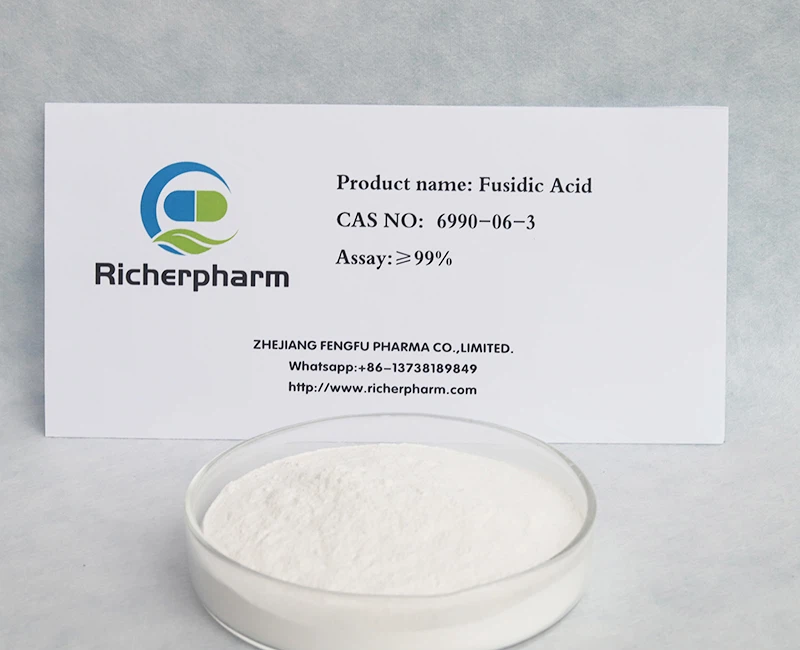
Chemical Name: Fusidic acid; Fusidic Acid API; Fusidic Acid Active Pharmaceutical Ingredient; CAS 6990-06-3; Acide Fusidique; Acido Fusidico; 6990-06-3;
CAS No.: 6990-06-3
Physical characteristics: white powder
Molecular Formula: C31H48O6·1/2 H2O

Vonoprazan Fumarate CAS 881681-01-2
Product: Vonoprazan Fumarate CAS 881681-01-2
Chemical Name: 1-(5-(2-Fluorophenyl)-1-(pyridin-3-ylsulfonyl)-1H-pyrrol-3-yl)-N-methylmethanamine fumarate
Another name: TAK438; TAK-438; MFCD18633280; 1260141-27-2 TAK-438 AKSci J97352; Fumarat Vonoprazana; Vonoprazan Fumarate-D3; N-methyl-1-(3-pyridyl sulfonyl)-1H-pyrrole-3-methanamine; 1-(5-(2-Fluorophenyl); AB457904 CAS 881681-01-2;

Product: Sodium Fusidate CAS 751-94-0
Chemical Name: Fusidate De Sodium; Fusidato De Sodio; Fuzydyt Alsudium; Natriy Fuzidat; 751-94-0; Fucidina; Fucidine; Fusidatesodium; Fusidin; Fusin; Intertullefucidin; Sodium fusidate reference substance;
CAS No.: 751-94-0
Physical characteristics: A white crystalline powder, and the solvent is a colorless clear liquid.

Product: Bacitracin Zinc CAS 1405-89-6
Another Name: Bacitracina De Zinc; Batsitrazin Tsink; Bacitracina De Zinco; CAS 1405-89-6; 1405-89-6;
Physical characteristics: Pale yellow to brownish-yellow powder; odorless with a bitter taste.
Molecular formula: C66H103N17O16SZn

Product: Lincomycin HCL CAS 859-18-7
Another Name: Lincomycin Hcl; lincomycin hydrochloride; methyl 6,8-dideoxy-6-{[(4R)-1-methyl-4-propyl-L-prolyl]amino}-1-thio-D-erythro-alpha-D-galacto-octopyranoside hydrochloride; Lincomycin hydrochloride anhydrous; CAS 859-18-7; 859-18-7; Hidrocloruro De Lincomicina; Hidruklurid Allinkomaisin; Lincocin; Lincomix; Lincomycin Monohydrochloride;

Pazufloxacin Mesilate CAS 163680-77-1
Product: Pazufloxacin Mesylate CAS 163680-77-1
Another Name: Pazufloxacin Methanesulfonate; pazufloxacin mesylate; Pazufloxacin MS; Pazufloxacin MSLT; Pazufloxacin Methanesulphonate; 163680-77-1; Pazufloxacin mesilate; Pazucross; Pazufloxacin (mesylate); Pazufloxaxin methanesulfonate; Pasil; T-3762;
FDA-Approved Indications
● Sucralfate is a unique anti-ulcer drug and is a basic aluminum salt of sucrose octa-sulfate. The labeled use of sucralfate is as follows:
● Duodenal Ulcer: Sucralfate is FDA-approved for treating duodenal ulcers for up to 8 weeks (short-term). Duodenal ulcers are treated with 1 g 4 times daily for 8 weeks, followed by 1 g twice-daily for maintenance therapy. The efficacy of sucralfate in the treatment of duodenal ulcers is shown to be comparable to that of cimetidine and intensive antacid therapy.
Sucralfate forms a protective coat and protects the gastric mucosa from pepsin, pectic acid, and bile salts. This drug binds to positively charged proteins in exudates, locally forming a thick viscous substance.
Off-Label Uses
● Dyspepsia: Sucralfate has been shown to reduce the frequency and intensity of dyspeptic symptoms and gastric erosion during NSAID therapy, and the efficacy is similar to that of an H2 receptor blocker.
● Epithelial wounds: Sucralfate has also been used as a topical drug in treating various epithelial wounds such as ulcers, inflammatory dermatitis, mucositis, and burns wounds. Several studies have been conducted to study sucralfate's efficacy in treating epithelial wounds.
Sucralfate increases the bioavailability of growth factors, especially fibroblast growth factor (FGF), which is pivotal in angiogenesis and promotes epithelial wound healing.
● Chemotherapy-induced mucositis: The results of a study by showed that high-potency sucralfate accelerates the activation of growth factors and helps treat chemotherapy-induced mucositis of the oropharynx and alimentary tract. This resulted from administering 1.5 g of sucralfate 3 times daily at the onset of mucositis for 2 days, followed by 1.5 g twice-daily throughout cancer therapy and 2 weeks after the completion of treatment.
● Radiation proctitis: Sucralfate paste enema has shown clinical improvement in hemorrhagic radiation proctitis treatment. This therapy uses a low-volume paste in an enema applicator, and pre-treatment and post-treatment improvements were assessed using clinical proctitis scores with a positive outcome. A study al has shown that a sucralfate enema is better than oral sulfasalazine in the short-term treatment of radiation proctitis.
● Prevention of ulceration of diversion colitis: Enemas containing sucralfate are shown to preserve the mucus layer covering the epithelium, thereby reducing inflammation in diversion colitis. The concentration of sucralfate used in the enema is 2 g/kg/d.
● Stress ulcer prophylaxis in ventilated patients: Research has shown that sucralfate is better for stress ulcer prophylaxis when compared to H2 blockers or antacids in patients receiving ventilation therapy as the latter increases the pH of gastric contents causing stagnation of gram-negative bacilli and subsequently increasing the risk of nosocomial pneumonia.
● Behcet disease: Topical sucralfate 1 g/5 mL 4 times daily alone or in combination with topical corticosteroids reduces pain and promotes the healing of oral ulcers in Behçet disease. Sucralfate suspension is the dosage form for treating oral ulcers in Behçet disease.
Gastroesophageal reflux disease: According to American College of Gastroenterology guidelines, sucralfate can be used during pregnancy for GERD.
● Take sucralfate 4 times a day, one (1) hour before each meal and at bedtime.
● Take sucralfate on an empty stomach.
● Sucralfate may affect the way other medicines work. These medicines include:
● Cimetidine
● Digoxin
● Phenytoin
● Ketoconazole
● Itraconazole
● Ciprofloxacin
● Norfloxacin
● Ranitidine
● Sucralfate
● Tetracycline
● Theophylline
● Always tell your doctor if you are taking any of these medicines, or if you start taking any new medicine while you are taking sucralfate.
● Always take sucralfate 2 hours before or after you take any other medicine unless your doctor or pharmacist has told you otherwise.
● Shake the liquid suspension very well before you take each dose.
Sucralfate should be taken on an empty stomach. That's because food can block sucralfate from binding to the lining of your intestine. Sucralfate can't stick to the ulcer or the lining around it if you have food in your digestive tract at the same time. So, it's best to avoid eating food around the time you take your medication.
If you're taking sucralfate before your meal, it's best to avoid eating for 2 hours after taking the medication. This will give sucralfate the time it needs to coat the digestive tract - without food interfering. This will also help the medication be more effective.
If you take your sucralfate before food, it is best to wait an hour to eat.
In deciding to use a medicine, the risks of taking the medicine must be weighed against the good it will do. This is a decision you and your doctor will make. For this medicine, the following should be considered:
Allergies
Tell your doctor if you have ever had any unusual or allergic reaction to this medicine or any other medicines. Also tell your health care professional if you have any other types of allergies, such as to foods, dyes, preservatives, or animals. For non-prescription products, read the label or package ingredients carefully.
Pediatric
Appropriate studies have not been performed on the relationship of age to the effects of sucralfate in the pediatric population. Safety and effectiveness have not been established.
Geriatric
Appropriate studies performed to date have not demonstrated geriatric-specific problems that would limit the usefulness of sucralfate in the elderly. However, elderly patients are more likely to have age-related liver, kidney, or heart problems, which may require caution and an adjustment in the dose for patients receiving this medicine.
Breastfeeding
There are no adequate studies in women for determining infant risk when using this medication during breastfeeding. Weigh the potential benefits against the potential risks before taking this medication while breastfeeding.
Drug Interactions
Although certain medicines should not be used together at all, in other cases two different medicines may be used together even if an interaction might occur. In these cases, your doctor may want to change the dose, or other precautions may be necessary. When you are taking this medicine, it is especially important that your healthcare professional know if you are taking any of the medicines listed below. The following interactions have been selected on the basis of their potential significance and are not necessarily all-inclusive.
Using this medicine with any of the following medicines is usually not recommended, but may be required in some cases. If both medicines are prescribed together, your doctor may change the dose or how often you use one or both of the medicines.
● Bictegravir
● Digoxin
● Dolutegravir
● Elvitegravir
● Ketoconazole
● Levoketoconazole
● Raltegravir
Using this medicine with any of the following medicines may cause an increased risk of certain side effects, but using both drugs may be the best treatment for you. If both medicines are prescribed together, your doctor may change the dose or how often you use one or both of the medicines.
● Ciprofloxacin
● Delafloxacin
● Fleroxacin
● Gemifloxacin
● Grepafloxacin
● Moxifloxacin
● Norfloxacin
● Ofloxacin
● Sparfloxacin
● Trovafloxacin Mesylate
● Warfarin
Other Interactions
Certain medicines should not be used at or around the time of eating food or eating certain types of food since interactions may occur. Using alcohol or tobacco with certain medicines may also cause interactions to occur. Discuss with your healthcare professional the use of your medicine with food, alcohol, or tobacco.
Other Medical Problems
The presence of other medical problems may affect the use of this medicine. Make sure you tell your doctor if you have any other medical problems, especially:
● Diabetes-Use with caution. May make this condition worse.
● Kidney disease (including patients with chronic kidney failure or those receiving dialysis)-Use with caution. The effects may be increased because of slower removal of the medicine from the body.
● Stomach and bowel disease-Sucralfate may bind with other foods and drugs which may cause blockage of the stomach and bowels.
How to Use Sucralfate CAS 54182-58-0
Take this medicine by mouth on an empty stomach (at least 1 hour before a meal) as directed by your doctor, usually 2 to 4 times daily. The dosage is based on your medical condition and response to treatment.
Use this medication regularly in order to get the most benefit from it. To help you remember, use it at the same times each day. Keep taking this medication even if you do not feel ulcer pain. Do not stop taking this medication without consulting your doctor. It may take 4 to 8 weeks for your ulcer to heal completely.
Some medications may not work as well if you take them at the same time as sucralfate. They may need to be taken at a different time of the day than the time you take sucralfate. Ask your doctor or pharmacist for help making a dosing schedule that will work with all your medications.
Antacids can be used with this medicine, but they should be taken at least 30 minutes before or after sucralfate.
Sucralfate CAS 54182-58-0 - Clinical Pharmacology
Sucralfate CAS 54182-58-0 is only minimally absorbed from the gastrointestinal tract. The small amounts of the sulfated disaccharide that are absorbed are excreted primarily in the urine.
Although the mechanism of sucralfate's ability to accelerate healing of duodenal ulcers remains to be fully defined, it is known that it exerts its effect through a local, rather than systemic, action.
The following observations also appear pertinent:
● Studies in human subjects and with animal models of ulcer disease have shown that sucralfate forms an ulcer-adherent complex with proteinaceous exudate at the ulcer site.
● In vitro, a sucralfate-albumin film provides a barrier to diffusion of hydrogen ions.
● In human subjects, sucralfate given in doses recommended for ulcer therapy inhibits pepsin activity in gastric juice by 32%.
● In vitro, sucralfate adsorbs bile salts.
These observations suggest that sucralfate's antiulcer activity is the result of formation of an ulcer-adherent complex that covers the ulcer site and protects it against further attack by acid, pepsin, and bile salts. There are approximately 14 to 16 mEq of acid-neutralizing capacity per 1 g dose of sucralfate.
● Sucralfate may be used to treat stomach conditions, such as duodenal ulcers.
● The exact way sucralfate works is not known; however, research shows it forms a film with albumin (a protein) exuded from the ulcer site. This film acts as a barrier to gastric acid, pepsin (one of the main digestive enzymes), and bile salts.
● Sucralfate belongs to the class of medicines known as disaccharide sulfates. It is also known as a protectant anti-ulcer medicine.
Our Factory
Zhejiang Fengfu Pharma Co.,Limited engaged in the development, production and marketing of pharmaceutical products, food ingredients, vitamins, intermediates and chemicals.
Fengfu Pharma,headquartered in Hangzhou, China, with 3 production bases in Shandong, Zhejiang and Hebei separately, which have many years of experience in the production of APIs, vitamins and chemical products. These facilities have been certified GMP, ISO, FAMI-QS, KOSHER, HALAL, etc. We have complete control over our product development, design, and manufacturing processes, thanks to our advanced equipment, methods, and inspection facilities.
With key competencies in pharmaceuticals and food health, Fengfu Pharma has established extensive business networks around the world. We have Strategic Marketing Partners respectively in Mumbai and Dubai. We are ready to provide you with our best products and services.
Our goal is to provide you with quality products and professional services for mutual benefit. We are also willing to work with partners around the world to create a better future together.

FAQ
Hot Tags: sucralfate cas 54182-58-0, China sucralfate cas 54182-58-0 manufacturers, suppliers, factory, api for human device usage data, api for human social data, api for human genetic data, human api for technology companies, api for human resource data, api for human career development


