Why Choose Us?
One-stop solution
Zhejiang Fengfu Pharma Co.,Limited engaged in the development, production and marketing of pharmaceutical products, food ingredients, vitamins, intermediates and chemicals.
Rich experience
Fengfu Pharma,headquartered in Hangzhou, China, with 3 production bases in Shandong, Zhejiang and Hebei separately, which have many years of experience in the production of APIs, vitamins and chemical products. These facilities have been certified GMP, ISO, FAMI-QS, KOSHER, HALAL, etc.
High quality
We have complete control over our product development, design, and manufacturing processes, thanks to our advanced equipment, methods, and inspection facilities.
High quality service
Our goal is to provide you with quality products and professional services for mutual benefit. We are also willing to work with partners around the world to create a better future together.
Metronidazole CAS 443-48-1 is a commonly used antibiotic, belonging to the nitroimidazole class of antibiotics. It is frequently used to treat gastrointestinal infections as well as trichomoniasis and giardiasis, and amebiasis which are parasitic infections. Metronidazole CAS 443-48-1 has been used as an antibiotic for several decades, with added antiparasitic properties that set it apart from many other antibacterial drugs, allowing it to treat a wide variety of infections. It is available in capsule form, tablet form, and topical form, and suppository preparations for the treatment of various infections.

Polymyxin B Sulfate CAS 1405-20-5
Product: Polymyxin B Sulfate CAS 1405-20-5
Chemical Name: Polymyxin B, sulfate (salt); Polymyxin B; Polymyxin-B-Sulfat; Sulfato De Polimixina B; Polymyxin B (PMB); PMB; Polymyxin B sulfate USP; Polymyxin B Sulfate 1405-20-5; Einecs 215-774-7;
CAS No.: 1405-20-5

Parecoxib Sodium CAS 198470-85-8
Product: Parecoxib Sodium CAS 198470-85-8
Alternative Name: Parecoxib Sodium; Parecoxib; Parecoxib Sodium API; Parecoxib Sodium API;
Chemical Name: 4-(5-methyl-3-phenyl-4-isoxazolyl)benzenesulfonamide sodium salt
Molecular formula: C19H18N2O4S·Na
Molecular mass: 392.409

Vonoprazan Fumarate CAS 1260141-27-2
Product: Vonoprazan Fumarate TAK-438
Another name: TAK438; TAK-438
CAS No.: 1260141-27-2
Application: It effectively terminates the secretion of gastric acid, thereby achieving acid suppression
Product Category: Gastrointestinal API, Pepsin digestive enzyme API, Pancreatin digestive enzyme API
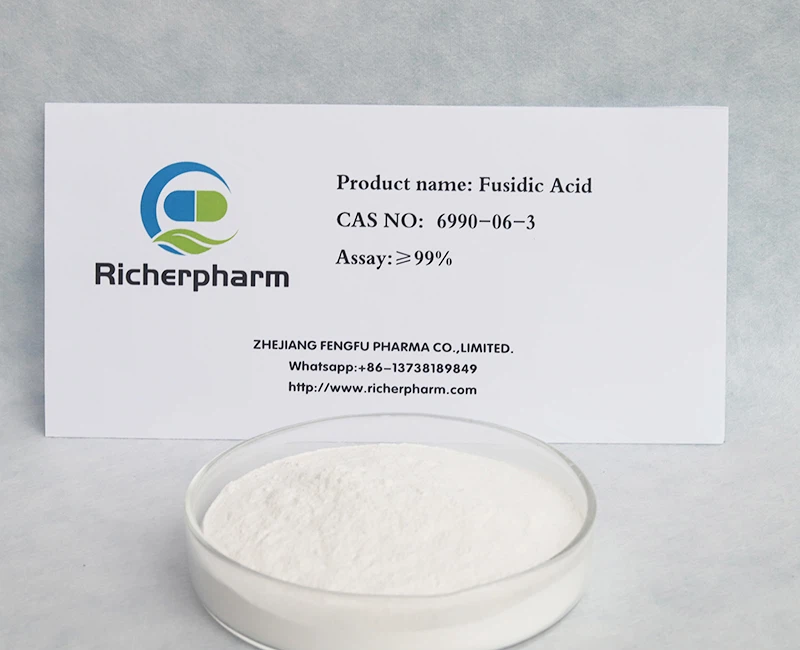
Product: Fusidic Acid 6990-06-3
Chemical Name: Fusidic acid; Fusidic Acid API; Fusidic Acid Active Pharmaceutical Ingredient; CAS 6990-06-3; Acide Fusidique; Acido Fusidico; 6990-06-3;
CAS No.: 6990-06-3
Physical characteristics: white powder
Molecular Formula: C31H48O6·1/2 H2O

Vonoprazan Fumarate CAS 881681-01-2
Product: Vonoprazan Fumarate CAS 881681-01-2
Chemical Name: 1-(5-(2-Fluorophenyl)-1-(pyridin-3-ylsulfonyl)-1H-pyrrol-3-yl)-N-methylmethanamine fumarate
Another name: TAK438; TAK-438; MFCD18633280; 1260141-27-2 TAK-438 AKSci J97352; Fumarat Vonoprazana; Vonoprazan Fumarate-D3; N-methyl-1-(3-pyridyl sulfonyl)-1H-pyrrole-3-methanamine; 1-(5-(2-Fluorophenyl); AB457904 CAS 881681-01-2;

Product: Sodium Fusidate CAS 751-94-0
Chemical Name: Fusidate De Sodium; Fusidato De Sodio; Fuzydyt Alsudium; Natriy Fuzidat; 751-94-0; Fucidina; Fucidine; Fusidatesodium; Fusidin; Fusin; Intertullefucidin; Sodium fusidate reference substance;
CAS No.: 751-94-0
Physical characteristics: A white crystalline powder, and the solvent is a colorless clear liquid.

Product: Bacitracin Zinc CAS 1405-89-6
Another Name: Bacitracina De Zinc; Batsitrazin Tsink; Bacitracina De Zinco; CAS 1405-89-6; 1405-89-6;
Physical characteristics: Pale yellow to brownish-yellow powder; odorless with a bitter taste.
Molecular formula: C66H103N17O16SZn

Product: Lincomycin HCL CAS 859-18-7
Another Name: Lincomycin Hcl; lincomycin hydrochloride; methyl 6,8-dideoxy-6-{[(4R)-1-methyl-4-propyl-L-prolyl]amino}-1-thio-D-erythro-alpha-D-galacto-octopyranoside hydrochloride; Lincomycin hydrochloride anhydrous; CAS 859-18-7; 859-18-7; Hidrocloruro De Lincomicina; Hidruklurid Allinkomaisin; Lincocin; Lincomix; Lincomycin Monohydrochloride;

Pazufloxacin Mesilate CAS 163680-77-1
Product: Pazufloxacin Mesylate CAS 163680-77-1
Another Name: Pazufloxacin Methanesulfonate; pazufloxacin mesylate; Pazufloxacin MS; Pazufloxacin MSLT; Pazufloxacin Methanesulphonate; 163680-77-1; Pazufloxacin mesilate; Pazucross; Pazufloxacin (mesylate); Pazufloxaxin methanesulfonate; Pasil; T-3762;
Metronidazole CAS 443-48-1 is one of the mainstay drugs for the treatment of anaerobic bacterial infections, protozoal infections, and microaerophilic bacterial infections. It is cytotoxic to facultative anaerobic microorganisms.
Metronidazole CAS 443-48-1 is FDA-approved for treating protozoal infections such as Trichomoniasis vaginalis, Entamoeba histolytica, Giardia lamblia, blastocysts, and Balantidium coli. It is also FDA approved to treat anaerobic bacterial infections caused by Bacteroides species, Fusobacterium species, Clostridium species, Gardnerella vaginalis, Helicobacter pylori, Prevotella species, Porphyromonas species, and Biophilia Wadsworth.[1] Therefore, it is not surprising that metronidazole is widely accepted and FDA-approved for the treatment of a broad range of infections: intestinal amebiases, liver amebiasis, bacterial septicemia, bone and joint infections, central nervous system (CNS) infections (meningitis and brain abscess), endocarditis, gynecologic infections (endometritis, tubo-ovarian abscess, bacterial vaginosis), intra-abdominal infections, lower respiratory tract infections, skin structure infections, and surgical prophylaxis (colorectal surgeries).
Topical metronidazole is indicated for rosacea. It is used intravaginally for bacterial vaginosis
Metronidazole has additional off-label uses in the management of other conditions and infections, including balantidiases, bite wound infections, animal and human bites, Clostridioides (formerly Clostridium difficile), Crohn disease, post-surgical resection management, perianal fistulas, Dietamoeba fragilis infections, giardiasis, Helicobacter pylori eradication, periodontitis, post ileal pouch-anal anastomosis (pouchitis), and tetanus.
Metronidazole has rapid bactericidal effects against anaerobic bacteria with a killing rate proportional to the drug concentration. Concentration-dependent bactericidal properties have been demonstrated against Entamoeba histolytica and Trichomonas vaginalis. Furthermore, it kills Bacteroides fragilis, and Clostridium perfringens more rapidly than treatment doses of clindamycin. It also penetrates the blood-brain barrier.
● Take this medicine only as directed by your doctor. Do not take more of it, do not take it more often, and do not take it for a longer time than your doctor ordered.
● This medicine comes with a patient information leaflet. Read and follow the instructions carefully. Ask your doctor if you have any questions.
● The capsules can be taken with or without food. If the medicine upsets your stomach, it is best to take it with a meal or snack.
● The extended–release tablet must be taken without food, 1 hour before or 2 hours after a meal.
● Swallow the extended-release tablet whole. Do not break, crush, or chew it.
● To use the suspension: Shake the bottle well before using. Measure the oral liquid medicine with a marked oral syringe or medicine cup. Do not use a household measuring cup.
● To help clear up your infection completely, keep using this medicine for the full time of treatment, even if you begin to feel better after a few days. If you stop using this medicine too soon, your infection may return.
● This medicine works best when there is a constant amount in the blood. To help keep the amount constant, do not miss any doses. Also, it is best to take the doses at evenly spaced times during the day. If you need help planning the best times to take your medicine, check with your doctor.
● The most common side effects of metronidazole tablets, liquid, suppositories or vaginal gel are feeling sick (nausea) or being sick (vomiting), diarrhoea, and a slight metallic taste in your mouth.
It's unusual to have any side effects from metronidazole cream or gel.
● Do not drink alcohol while taking a course of metronidazole tablets, liquid, suppositories or vaginal gel, or for 2 days after finishing treatment. Alcohol can cause side effects such as feeling and being sick, stomach pain, hot flushes, difficulty breathing, a pounding heartbeat (palpitations) and headaches.
● For most infections, you'll start to feel better in a few days, but for some it may take longer. When treating rosacea, you may only notice a difference after several weeks.
● It's important to take metronidazole as your doctor tells you, and finish your full course of treatment.
Tell your doctor if you or your child has Cockayne syndrome (an inherited condition that causes sensitivity to light, premature aging, failure to gain weight and grow, and delayed development). Your doctor will probably tell you that you or your child should not take metronidazole.
Tell your doctor and pharmacist if you are allergic to metronidazole, benznidazole, fexinidazole, secnidazole, tinidazole, any other medications, or any of the ingredients in metronidazole preparations. Ask your pharmacist for a list of the ingredients.
Tell your doctor or pharmacist if you are taking the following medication or have stopped taking it within the past two weeks: disulfiram.
Tell your doctor and pharmacist what prescription, nonprescription medications, vitamins, nutritional supplements, and herbal products you are taking or plan to take. Your doctor may need to change the doses of your medications or monitor you carefully for side effects.
The following nonprescription or herbal products may interact with metronidazole: cimetidine. Be sure to let your doctor and pharmacist know that you are taking this medication before you start taking metronidazole. Do not start this medication while taking metronidazole without discussing with your healthcare provider.
Tell your doctor if you have or have ever had Crohn's disease, blood problems, or kidney or liver disease. Also, tell your doctor if you have a yeast infection or a medical condition that affects your brain.
Tell your doctor if you are pregnant or plan to become pregnant. If you become pregnant while taking metronidazole, call your doctor. Women who are pregnant generally should not take metronidazole during the first trimester (first 3 months) of pregnancy.
Tell your doctor if you are breastfeeding or plan to breastfeed. If you take metronidazole while you are breastfeeding, your baby may receive some metronidazole in breast milk. If you are breastfeeding, your doctor may tell you to pump and discard your milk while you are taking metronidazole and for 48 hours after your final dose. Talk to your doctor about the best way to feed your baby while you are taking metronidazole.
Do not drink alcoholic beverages or take products with alcohol or propylene glycol while taking this medication and for at least 3 days after your final dose. Alcohol and propylene glycol may cause nausea, vomiting, stomach cramps, headache, sweating, and flushing (redness of the face) when taken with metronidazole.
What Drugs Interact with Metronidazole CAS 443-48-1
Disulfiram
Psychotic reactions have been reported in alcoholic patients who are using metronidazole and disulfiram concurrently. Metronidazole should not be given to patients who have taken disulfiram within the last two weeks.
Alcoholic Beverages
Abdominal cramps, nausea, vomiting, headaches, and flushing may occur if alcoholic beverages or products containing propylene glycol are consumed during or following metronidazole therapy.
Warfarin And other Oral Anticoagulants
Metronidazole has been reported to potentiate the anticoagulant effect of warfarin and other oral coumarin anticoagulants, resulting in a prolongation of prothrombin time. When metronidazole CAS 443-48-1 is prescribed for patients on this type of anticoagulant therapy, prothrombin time and INR should be carefully monitored.
Lithium
In patients stabilized on relatively high doses of lithium, short-term metronidazole therapy has been associated with elevation of serum lithium and, in a few cases, signs of lithium toxicity. Serum lithium and serum creatinine levels should be obtained several days after beginning metronidazole to detect any increase that may precede clinical symptoms of lithium intoxication.
Busulfan
Metronidazole has been reported to increase plasma concentrations of busulfan, which can result in an increased risk for serious busulfan toxicity. Metronidazole should not be administered concomitantly with busulfan unless the benefit outweighs the risk. If no therapeutic alternatives to metronidazole are available, and concomitant administration with busulfan is medically needed, frequent monitoring of busulfan plasma concentration should be performed and the busulfan dose should be adjusted accordingly.
Drugs That Inhibit CYP450 Enzymes
The simultaneous administration of drugs that decrease microsomal liver enzyme activity, such as cimetidine, may prolong the half-life and decrease plasma clearance of metronidazole.
Drugs That Induce CYP450 Enzymes
The simultaneous administration of drugs that induce microsomal liver enzymes, such as phenytoin or phenobarbital, may accelerate the elimination of metronidazole, resulting in reduced plasma levels; impaired clearance of phenytoin has also been reported.
Drug/Laboratory Test Interactions
Metronidazole may interfere with certain types of determinations of serum chemistry values, such as aspartate aminotransferase (AST, SGOT), alanine aminotransferase (ALT, SGPT), lactate dehydrogenase (LDH), triglycerides, and glucose hexokinase. Values of zero may be observed. All of the assays in which interference has been reported involve enzymatic coupling of the assay to oxidation-reduction of nicotinamide adenine dinucleotide (NAD+ NADH). Interference is due to the similarity in absorbance peaks of NADH (340 nm) and metronidazole (322 nm) at pH 7.
Specification of Metronidazole CAS 443-48-1
Purity: >98%
Source: Synthetic
Appearance: White to Off-white Solid
Synonyms: Flagyl; Metronidazol; 2-Methyl-5-nitroimidazole-1-Ethanol; Novonidazol; 2-Methyl-5-nitro-1H-imidazole-1-Ethanol; Anagiardil; Arilin; Bayer 5360; Cimetrol 500LPCI; Clont; Deflamon; Dentamet gel; Efloran; Elyzol; Flagesol; Flagil; 1-(2-Hydroxyethyl)-2-methyl-5-nitroimidazole; NSC 50364; NSC 69587; Nidazole
IUPAC Name: 2-(2-methyl-5-nitroimidazol-1-yl)Ethanol
SolubilitySlightly: Soluble in DMSO, Methanol
StorageStore: At 2-8°C
Antibiotic Activity Spectrum: Gram-positive bacteria; Gram-negative bacteria; Parasites
Packaging: 500 g
Absorption
Disposition of metronidazole in the body is similar for both oral and intravenous dosage forms. Following oral administration, metronidazole is well absorbed, with peak plasma concentrations occurring between one and two hours after administration.
Plasma concentrations of metronidazole are proportional to the administered dose. Oral administration of 250 mg, 500 mg, or 2,000 mg produced peak plasma concentrations of 6 mcg/mL, 12 mcg/mL, and 40 mcg/mL, respectively. Studies reveal no significant bioavailability differences between males and females; however, because of weight differences, the resulting plasma levels in males are generally lower.
Distribution
Metronidazole is the major component appearing in the plasma, with lesser quantities of metabolites also being present. Less than 20% of the circulating metronidazole is bound to plasma proteins. Metronidazole appears in cerebrospinal fluid, saliva, and breast milk in concentrations similar to those found in plasma. Bactericidal concentrations of metronidazole have also been detected in pus from hepatic abscesses.
Metabolism/Excretion
The major route of elimination of metronidazole and its metabolites is via the urine (60% to 80% of the dose), with fecal excretion accounting for 6% to 15% of the dose. The metabolites that appear in the urine result primarily from side-chain oxidation [1-(β-hydroxyethyl)-2-hydroxymethyl-5-nitroimidazole and 2-methyl-5-nitroimidazole-1-yl-acetic acid] and glucuronide conjugation, with unchanged metronidazole accounting for approximately 20% of the total. Both the parent compound and the hydroxyl metabolite possess in vitro antimicrobial activity.
Renal Impairment
Decreased renal function does not alter the single-dose pharmacokinetics of metronidazole.
Subjects with end-stage renal disease (ESRD; CLCR= 8.1±9.1 mL/min) and who received a single intravenous infusion of metronidazole 500 mg had no significant change in metronidazole pharmacokinetics but had 2-fold higher Cmax of hydroxy-metronidazole and 5-fold higher Cmax of metronidazole acetate, compared to healthy subjects with normal renal function (CLCR= 126±16 mL/min). Thus, on account of the potential accumulation of metronidazole metabolites in ESRD patients, monitoring for metronidazole associated adverse events is recommended.
Effect of Dialysis
Following a single intravenous infusion or oral dose of metronidazole 500 mg, the clearance of metronidazole was investigated in ESRD subjects undergoing hemodialysis or continuous ambulatory peritoneal dialysis (CAPD). A hemodialysis session lasting for 4 to 8 hours removed 40% to 65% of the administered metronidazole dose, depending on the type of dialyzer membrane used and the duration of the dialysis session. If the administration of metronidazole cannot be separated from the dialysis session, supplementation of metronidazole dose following hemodialysis should be considered (see DOSAGE AND ADMINISTRATION). A peritoneal dialysis session lasting for 7.5 hours removed approximately 10% of the administered metronidazole dose. No adjustment in metronidazole dose is needed in ESRD patients undergoing CAPD.
Hepatic Impairment
Following a single intravenous infusion of 500 mg metronidazole, the mean AUC24 of metronidazole was higher by 114% in patients with severe (Child-Pugh C) hepatic impairment, and by 54% and 53% in patients with mild (Child-Pugh A) and moderate (Child-Pugh B) hepatic impairment, respectively, compared to healthy control subjects. There were no significant changes in the AUC24 of hydroxyl-metronidazole in these hepatically impaired patients. A reduction in metronidazole dosage by 50% is recommended in patients with severe (Child-Pugh C) hepatic impairment. No dosage adjustment is needed for patients with mild to moderate hepatic impairment. Patients with mild to moderate hepatic impairment should be monitored for metronidazole associated adverse events.
Geriatric Patients
Following a single 500 mg oral or IV dose of metronidazole, subjects >70 years old with no apparent renal or hepatic dysfunction had a 40% to 80% higher mean AUC of hydroxy-metronidazole (active metabolite), with no apparent increase in the mean AUC of metronidazole (parent compound), compared to young healthy controls <40 years old. In geriatric patients, monitoring for metronidazole associated adverse events is recommended.
Our Factory
Zhejiang Fengfu Pharma Co.,Limited engaged in the development, production and marketing of pharmaceutical products, food ingredients, vitamins, intermediates and chemicals.
Fengfu Pharma,headquartered in Hangzhou, China, with 3 production bases in Shandong, Zhejiang and Hebei separately, which have many years of experience in the production of APIs, vitamins and chemical products. These facilities have been certified GMP, ISO, FAMI-QS, KOSHER, HALAL, etc. We have complete control over our product development, design, and manufacturing processes, thanks to our advanced equipment, methods, and inspection facilities.
With key competencies in pharmaceuticals and food health, Fengfu Pharma has established extensive business networks around the world. We have Strategic Marketing Partners respectively in Mumbai and Dubai. We are ready to provide you with our best products and services.
Our goal is to provide you with quality products and professional services for mutual benefit. We are also willing to work with partners around the world to create a better future together.

FAQ
Hot Tags: metronidazole cas 443-48-1, China metronidazole cas 443-48-1 manufacturers, suppliers, factory, human api for marketing, human api services, api for human employment data, api for human ad response data, api for analyzing human data, api for human online behavior