


Why Choose Us?
One-stop solution
Zhejiang Fengfu Pharma Co.,Limited engaged in the development, production and marketing of pharmaceutical products, food ingredients, vitamins, intermediates and chemicals.
Rich experience
Fengfu Pharma,headquartered in Hangzhou, China, with 3 production bases in Shandong, Zhejiang and Hebei separately, which have many years of experience in the production of APIs, vitamins and chemical products. These facilities have been certified GMP, ISO, FAMI-QS, KOSHER, HALAL, etc.
High quality
We have complete control over our product development, design, and manufacturing processes, thanks to our advanced equipment, methods, and inspection facilities.
High quality service
Our goal is to provide you with quality products and professional services for mutual benefit. We are also willing to work with partners around the world to create a better future together.
Upadacitinib is a medication used for the treatment of rheumatoid arthritis, psoriatic arthritis, atopic dermatitis, ulcerative colitis, Crohn's disease, ankylosing spondylitis, and axial spondyloarthritis.Upadacitinib is a Janus kinase (JAK) inhibitor that works by blocking the action of enzymes called Janus kinases.These enzymes are involved in setting up processes that lead to inflammation, and blocking their effect brings inflammation in the joints under control.

Product: Upadacitinib CAS 1310726-60-3
Another Name: Upadacitinib; ABT-494; ABT-494 (Upadacitinib) free base; ABT-494 (Upadacitinib);
Chemical Name: (3S,4R)-3-Ethyl-4-(3H-imidazo[1,2-a]pyrrolo[2,3-e]pyrazin-8-yl)-N-(2,2,2-trifluoroethyl)-1-pyrrolidinecarboxamide
Molecular formula: C17H19F3N6O

Product: Ruxolitinib CAS 941678-49-5
Alternative Names: INCB018424; Ruxolitinib; Ruxolitinib Phosphate API; Ruxolitinib API; Ruxolitinib Intermediates;
Chemical Name: (3R)-3-Cyclopentyl-3-[4-(7H-pyrrolo[2,3-d]pyrimidin-4-yl)-1H-pyrazol-1-yl]propanenitrile
Molecular formula: 306.37
Molecular mass: C17H18N6
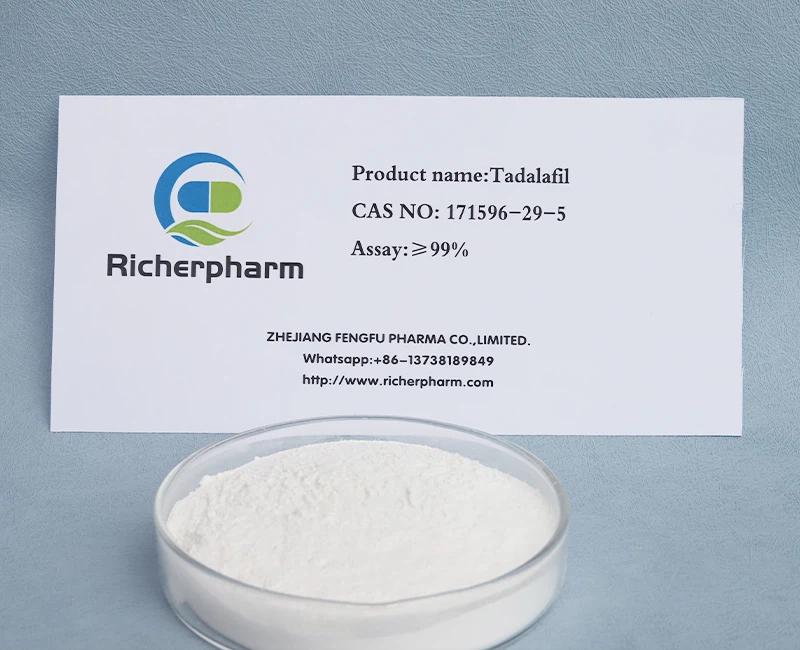
Product: Tadalafil CAS 171596-29-5
Alternative Names: Tadalafil API; Cialis Tadalafil API; Adcirca API; CAS 171596-29-5; 171596-29-5; IC 351; ICOS351; Cialis 98%; Tildenafil; UK 336017;
Chemical Name: (6R,12aR)-6-(1,3-Benzodioxol-5-yl)-2,3,6,7,12,12a-hexahydro-2-methylpyrazino[1',2':1,6]pyrido[3,4-b]indole-1,4-dione
Molecular formula: C22H19N3O4
Molecular mass: 389.41

Lidocaine Hydrochloride CAS 6108-05-0
Product: Lidocaine hydrochloride CAS 6108-05-0
Alternative Names: Lidocaine Hydrochloride Monohydrate; Lidocaine hydrochloride anhydrous; Lidocaine; Lidocaine HCl; Lignocaine Hydrochloride; Lignocaine HCl; 6108-05-0; 137-58-6;
Chemical Name: 2-Dimethylamino-N-(2,6-dimethylphenyl)acetamide hydrochloride
Molecular formula: C14H25ClN2O2
Molecular mass: 288.814

Ropivacaine Hydrochloride CAS 132112-35-7
Product: Ropivacaine hydrochloride CAS 132112-35-7
Alternative Names: Ropivacaine HCl; Ropivacaine Hydrochloride Monohydrate; Naropin API; Ropivacaine Monohydrochloride; 132112-35-7;
Molecular formula: C17H26N2O.ClH.H2O
Molecular mass: 328.88
CAS No.: 132112-35-7

Prilocaine Hydrochloride CAS 1786-81-8
Product: Prilocaine hydrochloride CAS 1786-81-8
Alternative Names: Prilocaine Hydrochloride; Prilocaine; Prilocaine HCl; Citanest API; Prilocaine Monohydrochloride; 721-50-6; 1786-81-8;
Chemical Name: 2-(Propylamino)-o-propionotoluidide hydrochloride;
Molecular formula: C13H21ClN2O

Pramoxine Hydrochloride CAS 637-58-1
Product: Pramoxine hydrochloride CAS 637-58-1
Alternative Names: Pramoxine HCL API; Pramoxine Hydrochloride 637-58-1; Pramoxine Hydrochloride (1554002); Pumocaine hydrochloride; Plamoxine hydrochloride; Pramoxine Monohydrochloride; Pramoxine Hydrochloride Monohydrate; 637-58-1;

Bupivacaine Hydrochloride CAS 73360-54-0
Product: Bupivacaine Hydrochloride CAS 73360-54-0
Alternative Names: Bupivacaine HCl hydrate; bupivacaine hydrochloride hydrate; Bupivacaine; 2180-92-9; Bupivacaine HCl; Bupivacaine Hydrochloride Monohydrate; Marcaine; Sensorcaine; Bupivacaine Monohydrochloride;

Articaine Hydrochloride CAS 23964-57-0
Product: Articaine hydrochloride CAS 23964-57-0
Alternative Names: Articaine HCl; Carticaine hydrochloride; Septocaine; Articaine Hydrochloride Monohydrate; Septocaine; 23964-57-0;
Chemical Name: 4-methyl-3-[[(1-oxo-2-(propylamino)propyl)amino]methyl]benzoic acid hydrochloride
Updacacitinib can be prescribed by a consultant rheumatologist for adults with moderate or severe rheumatoid arthritis. It can also be used to treat psoriatic arthritis.
Upadacitinib won't be started if:
● Your condition isn't active
● You haven't tried other treatments for your condition first
● You have an infection
Before you're prescribed upadacitinib, doctors may use a scoring system to assess how many of your joints are painful or swollen and how you are feeling. This helps them work out how active your arthritis is. You'll also need blood tests before treatment starts to see whether the drug is suitable for you.
Your doctor will need to check if you've previously been exposed to tuberculosis (TB). Even if you don't have symptoms, the bacteria that cause TB may still be present in the body, and you may need a course of treatment to deal with this before starting upadacitinib.
If you've ever had hepatitis you may need regular checks for this as upadacitinib may increase the risk of the hepatitis coming back.
Upadacitinib is usually prescribed alongside methotrexate unless there are reasons why you can't take methotrexate. However, upadacitinib should not be used alongside other immunosuppressive or biologic drugs or other JAK inhibitors.
Upadacitinib is not recommended if you're pregnant, planning to become pregnant or breastfeeding.
Your doctor may decide not to prescribe upadacitinib if you've had or have any of the following:
● Shingles
● Disease of the lungs, liver or kidneys
● Heart problems, high blood pressure, high cholesterol, or blood clots (deep vein thrombosis or pulmonary embolism)
● Stomach ulcers
● Cancer
Upadacitinib CAS 1310726-60-3 is a new FDA-approved second-line agent for treating moderate to severe active rheumatoid arthritis (RA) in patients who have not shown an adequate response or intolerance to the first-line agent, methotrexate.This agent is a second-generation selective Janus kinase (JAK) inhibitor targeting the JAK1 enzyme.
Using upadacitinib with other JAK inhibitors (JAKinibs) or robust immunosuppressants like azathioprine and cyclosporine is not advised. However, its use in combination with nonbiologic disease-modifying antirheumatic drugs (DMARDs) such as methotrexate is supported, while its use with biological DMARDs is not recommended. When combined with the first-line therapy methotrexate, upadacitinib repressed disease progression on radiographic imaging and maintained clinical efficacy.
Clinical advancements for agents used in other autoimmune diseases, such as psoriatic arthritis (PA), atopic dermatitis (AD), ankylosing spondylitis (AS), giant cell arteritis (GCA), systemic lupus erythematosus (SLE), and inflammatory bowel disease (IBD), Crohn disease (CD) and ulcerative colitis (UC), have shown promising results.Upadacitinib marks a significant milestone as the first oral medication approved by the FDA to treat moderate to severe Crohn disease.
Upadacitinib is FDA-approved for patients with AD who have failed other systemic therapies, including biologics, or when the use of those therapies is inadvisable. For patients with ulcerative colitis (UC) who experience recurrent pouchitis after ileal pouch-anal anastomosis (IPAA), the American Gastroenterological Association (AGA) suggests advanced immunosuppressive therapies like upadacitinib. Upadacitinib can be considered for chronic antibiotic-dependent pouchitis. Endoscopic evaluation is advised to confirm inflammation and rule out other causes.
For patients with ulcerative colitis (UC) who have undergone IPAA and develop symptoms due to cuffitis, the AGA suggests using topical therapies approved for UC treatment, such as topical mesalamine and topical corticosteroids. Upadacitinib or other immunosuppressive therapies may be considered for refractory cases.
When Can I Expect Upadacitinib CAS 1310726-60-3 to Work
Upadacitinib works for most patients, usually soon after starting the medication. Some patients may feel an improvement in symptoms as soon as 1-2 weeks of starting upadacitinib. Some patients may need to give it some time for the medication to start working. Typically, up to 2 months is required to see a benefit. If a patient does not see any improvement after taking the medication for 2 months, the likelihood of it working for them at all is low.
The inflammation of atopic dermatitis (AD) is caused in part by immune system messengers called cytokines that are increased in the blood and the skin. Several of these inflammatory cytokines exert their effects through a chemical signal pathway inside cells known as the JAK-STAT pathway (Janus Kinase-Signal transducer and activators of transcription).
The JAK family has four members – JAK inhibitors can target one or more of these family members to block these immune signals and inhibit the inflammatory effect of key cytokines involved in AD.
Upadacitinib works by selectively blocking JAK1, which is a JAK family member associated with several cytokines and other pathways that drive inflammation and itch in AD.
How to Take Upadacitinib CAS 1310726-60-3
Upadacitinib is a tablet that is taken once per day. Taking upadacitinib with food may decrease nausea or other gastrointestinal distress you may feel. Upadacitinib may be used alone or in combination with methotrexate or other conventional disease modifying antirheumatic drugs (cDMARDs). Upadacitinib should not be given in combination with another biologic drug or other medications that lower your immune system. Some patients will start to see improvement within a few weeks, but it may take several months to take full effect.
Upadacitinib is a DMARD used to treat inflammatory types of arthritis, such as rheumatoid arthritis (RA).
Upadacitinib is recommended for use in combination with methotrexate (MTX) in adult patients with moderate to severely active RA who have had an inadequate response to MTX. For patients who cannot tolerate MTX, upadacitinib may be given as monotherapy.
Upadacitinib is never used in combination with biologic medications. Combining upadacitinib with biologic therapy is not recommended because of the increased risk for infection.
Rheumatoid arthritis
Five studies involving a total of nearly 4,400 patients found upadacitinib effective in reducing symptoms in patients with moderate to severe rheumatoid arthritis. These studies involved rating disease activity in 28 joints in the body on a standard scale. They showed that upadacitinib was effective at clearing the symptoms or achieving low disease activity in 43 to 48% of patients; this compared with a reduced disease activity in 14 to 19% of patients given placebo (a dummy treatment) or methotrexate.
Psoriatic arthritis
Two studies involving over 2,000 patients with active psoriatic arthritis despite prior treatment showed that upadacitinib, used on its own or with methotrexate, was more effective than adalimumab (another medicine used for psoriatic arthritis) or placebo at reducing the symptoms of the disease. Between 57 and 71% of patients on upadacitinib at a dose of 15 mg per day achieved a reduction in symptoms after 12 weeks of treatment, compared with 65% of patients treated with adalimumab and 24 to 36% of patients on placebo.
Axial spondyloarthritis
For ankylosing spondylitis a 14-week study involving 187 patients whose disease could not be controlled well enough with other treatments showed that upadacitinib was effective at reducing symptoms of the disease. Of the patients who received upadacitinib, around 52% had a reduction in the number and severity of symptoms, compared with 26% of patients on placebo.
In addition, a study involving around 300 patients with non-radiographic axial spondyloarthritis whose diseases could not be controlled well enough with other treatments showed that upadacitinib improved symptoms of the disease: symptoms improved by at least 40% after 14 weeks in 45% of patients taking upadacitinib compared with 23% of patients on placebo.
Atopic dermatitis
Upadacitinib was effective at clearing up the skin and reducing disease extent and severity in patients with moderate to severe atopic dermatitis in three main studies involving a total of 2,584 adults and children from 12 years of age. The studies compared the effects of two doses of upadacitinib (15 and 30 mg a day), used with or without corticosteroids applied to the skin, with placebo.
Treatment with upadacitinib on its own led to reduced extent and severity of the disease in 60 to 70% of patients taking the 15 mg dose and in 73 to 80% of those taking 30 mg, compared with 13 to 16% of patients given placebo. Clear or almost clear skin was achieved in 39 to 62% of patients taking upadacitinib, compared with 5 to 8% of patients on placebo.
Similar results were observed when upadacitinib was used with corticosteroids: extent and severity of the disease were reduced in 65 to 77% of patients taking upadacitinib versus 26% of patients on placebo; skin cleared or almost cleared in 40 to 59% of patients taking upadacitinib, compared with 11% of patients in the placebo group.
Ulcerative colitis
Two main studies involving 988 patients showed that upadacitinib was effective at clearing symptoms and improving the inflammation in the lining of the bowel of moderately to severely active ulcerative colitis in patients whose disease had not responded to other treatment or who could not tolerate other treatment.
After eight weeks of treatment during which patients took upadacitinib 45 mg or placebo once a day, the proportion of patients on upadacitinib whose symptoms were gone or almost gone, along with normal or mild inflammation in the lining of the bowel, was 26% in the first study and 34% in the second study, compared with almost 5% and 4% for those taking placebo.
Crohn's disease
Two main studies involving a total of 1,021 patients with moderately to severely active Crohn's disease showed that upadacitinib was effective at improving symptoms of the disease. After 12 weeks of treatment during which patients took upadacitinib 45 mg or placebo once a day, the proportion of patients on upadacitinib whose symptoms were gone or almost gone in the two studies was 40% and 51%, compared with 14% and 22% for those taking placebo. Inflammation of the gut lining was reduced by more than half in 35% and 46% of patients given upadacitinib, compared with 4% and 13% in patients given placebo.
Our Factory
Zhejiang Fengfu Pharma Co.,Limited engaged in the development, production and marketing of pharmaceutical products, food ingredients, vitamins, intermediates and chemicals.
Fengfu Pharma,headquartered in Hangzhou, China, with 3 production bases in Shandong, Zhejiang and Hebei separately, which have many years of experience in the production of APIs, vitamins and chemical products. These facilities have been certified GMP, ISO, FAMI-QS, KOSHER, HALAL, etc. We have complete control over our product development, design, and manufacturing processes, thanks to our advanced equipment, methods, and inspection facilities.
With key competencies in pharmaceuticals and food health, Fengfu Pharma has established extensive business networks around the world. We have Strategic Marketing Partners respectively in Mumbai and Dubai. We are ready to provide you with our best products and services.
Our goal is to provide you with quality products and professional services for mutual benefit. We are also willing to work with partners around the world to create a better future together.

FAQ
Hot Tags: upadacitinib cas 1310726-60-3, China upadacitinib cas 1310726-60-3 manufacturers, suppliers, factory, intermediate diastereomers, specialty intermediates, api for human wellness data, human api integration, api for human video viewing habits, api for human medical data


