Why Choose Us?
One-stop solution
Zhejiang Fengfu Pharma Co.,Limited engaged in the development, production and marketing of pharmaceutical products, food ingredients, vitamins, intermediates and chemicals.
Rich experience
Fengfu Pharma,headquartered in Hangzhou, China, with 3 production bases in Shandong, Zhejiang and Hebei separately, which have many years of experience in the production of APIs, vitamins and chemical products. These facilities have been certified GMP, ISO, FAMI-QS, KOSHER, HALAL, etc.
High quality
We have complete control over our product development, design, and manufacturing processes, thanks to our advanced equipment, methods, and inspection facilities.
High quality service
Our goal is to provide you with quality products and professional services for mutual benefit. We are also willing to work with partners around the world to create a better future together.
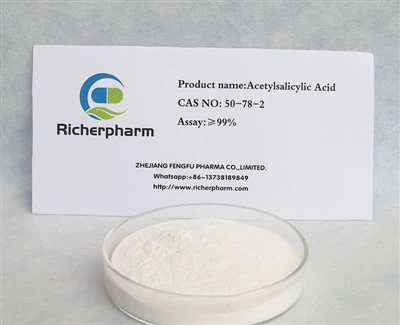
Acetylsalicylic acid appears as odorless white crystals or crystalline powder with a slightly bitter taste.
Acetylsalicylic acid is a member of the class of benzoic acids that is salicylic acid in which the hydrogen that is attached to the phenolic hydroxy group has been replaced by an acetoxy group. A non-steroidal anti-inflammatory drug with cyclooxygenase inhibitor activity. It has a role as a non-steroidal anti-inflammatory drug, a non-narcotic analgesic, a platelet aggregation inhibitor, an antipyretic, a cyclooxygenase 2 inhibitor, a cyclooxygenase 1 inhibitor, a prostaglandin antagonist, a teratogenic agent, an anticoagulant, a plant activator, an EC 1.1.1.188 (prostaglandin-F synthase) inhibitor, a drug allergen and a geroprotector. It is a member of benzoic acids, a member of salicylates and a member of phenyl acetates. It is functionally related to a salicylic acid. It is a conjugate acid of an acetylsalicylate.

Product: Upadacitinib CAS 1310726-60-3
Another Name: Upadacitinib; ABT-494; ABT-494 (Upadacitinib) free base; ABT-494 (Upadacitinib);
Chemical Name: (3S,4R)-3-Ethyl-4-(3H-imidazo[1,2-a]pyrrolo[2,3-e]pyrazin-8-yl)-N-(2,2,2-trifluoroethyl)-1-pyrrolidinecarboxamide
Molecular formula: C17H19F3N6O

Product: Ruxolitinib CAS 941678-49-5
Alternative Names: INCB018424; Ruxolitinib; Ruxolitinib Phosphate API; Ruxolitinib API; Ruxolitinib Intermediates;
Chemical Name: (3R)-3-Cyclopentyl-3-[4-(7H-pyrrolo[2,3-d]pyrimidin-4-yl)-1H-pyrazol-1-yl]propanenitrile
Molecular formula: 306.37
Molecular mass: C17H18N6

Acetylsalicylic Acid CAS 50-78-2
Product: Acetylsalicylic Acid CAS 50-78-2
Alternative Name: Aspirin; ASA; Adiro; 2-Acetoxybenzoic Acid; Acetyonyl; Easprin; Triaminicin; Acetylsalicylic Acid; CAS 50-78-2; 50-78-2;
Chemical Name: 2-acetoxybenzoic acid
Molecular formula: C9H8O4
Molecular mass: 180.15
CAS No.: 50-78-2

Lidocaine Hydrochloride CAS 6108-05-0
Product: Lidocaine hydrochloride CAS 6108-05-0
Alternative Names: Lidocaine Hydrochloride Monohydrate; Lidocaine hydrochloride anhydrous; Lidocaine; Lidocaine HCl; Lignocaine Hydrochloride; Lignocaine HCl; 6108-05-0; 137-58-6;
Chemical Name: 2-Dimethylamino-N-(2,6-dimethylphenyl)acetamide hydrochloride
Molecular formula: C14H25ClN2O2
Molecular mass: 288.814

Ropivacaine Hydrochloride CAS 132112-35-7
Product: Ropivacaine hydrochloride CAS 132112-35-7
Alternative Names: Ropivacaine HCl; Ropivacaine Hydrochloride Monohydrate; Naropin API; Ropivacaine Monohydrochloride; 132112-35-7;
Molecular formula: C17H26N2O.ClH.H2O
Molecular mass: 328.88
CAS No.: 132112-35-7

Prilocaine Hydrochloride CAS 1786-81-8
Product: Prilocaine hydrochloride CAS 1786-81-8
Alternative Names: Prilocaine Hydrochloride; Prilocaine; Prilocaine HCl; Citanest API; Prilocaine Monohydrochloride; 721-50-6; 1786-81-8;
Chemical Name: 2-(Propylamino)-o-propionotoluidide hydrochloride;
Molecular formula: C13H21ClN2O

Pramoxine Hydrochloride CAS 637-58-1
Product: Pramoxine hydrochloride CAS 637-58-1
Alternative Names: Pramoxine HCL API; Pramoxine Hydrochloride 637-58-1; Pramoxine Hydrochloride (1554002); Pumocaine hydrochloride; Plamoxine hydrochloride; Pramoxine Monohydrochloride; Pramoxine Hydrochloride Monohydrate; 637-58-1;

Bupivacaine Hydrochloride CAS 73360-54-0
Product: Bupivacaine Hydrochloride CAS 73360-54-0
Alternative Names: Bupivacaine HCl hydrate; bupivacaine hydrochloride hydrate; Bupivacaine; 2180-92-9; Bupivacaine HCl; Bupivacaine Hydrochloride Monohydrate; Marcaine; Sensorcaine; Bupivacaine Monohydrochloride;

Articaine Hydrochloride CAS 23964-57-0
Product: Articaine hydrochloride CAS 23964-57-0
Alternative Names: Articaine HCl; Carticaine hydrochloride; Septocaine; Articaine Hydrochloride Monohydrate; Septocaine; 23964-57-0;
Chemical Name: 4-methyl-3-[[(1-oxo-2-(propylamino)propyl)amino]methyl]benzoic acid hydrochloride
Acetylsalicylic acid works in a few ways. It can help to prevent clot formation (such as in heart attacks and strokes) by inhibiting platelet function. Platelets are the particles in the blood that cause a clot to form when you get a cut. It does this by inhibiting cyclooxygenase (COX) activity, which in turn inhibits compounds known as prostaglandins.
Prostaglandins are also responsible for fevers and pain. So by inhibiting cyclooxygenase, ASA may reduce not only clot formation but also fever and pain.
How to Take Acetylsalicylic Acid CAS 50-78-2
● Take acetylsalicylic acid exactly as directed on the label, or as prescribed by your doctor. Do not use in larger or smaller amounts or for longer than recommended.
● Always follow directions on the medicine label about giving acetylsalicylic acid to a child.
● Take with food if acetylsalicylic acid upsets your stomach.
● You must chew the chewable tablet before you swallow it.
● Do not crush, chew, break, or open an enteric-coated or delayed/extended-release pill. Swallow the pill whole.
● If you need surgery, tell the surgeon ahead of time that you are using this medicine. You may need to stop using it for a short time.
● Do not use acetylsalicylic acid if you smell a strong vinegar odor in the bottle. The medicine may no longer be effective.
● Store at room temperature away from moisture and heat.
Here are some common applications of Acetylsalicylic Acid:
Analgesic and Anti-inflammatory: Acetylsalicylic Acid is widely used as an analgesic (pain reliever) and anti-inflammatory agent. It helps alleviate mild to moderate pain, including headaches, toothaches, muscle aches, and joint pain. It also reduces inflammation associated with conditions like arthritis and swelling.
Fever Reduction: Acetylsalicylic Acid has antipyretic properties, meaning it can help reduce fever. It is commonly used to lower elevated body temperature caused by infections or other factors.
Cardiovascular Health: Acetylsalicylic Acid is often prescribed for its antiplatelet effect, which helps prevent blood clot formation. It is used as a preventive measure for individuals at risk of heart attacks, strokes, and certain cardiovascular conditions. Low-dose aspirin is commonly recommended in such cases.
Thrombosis Prevention: Due to its antiplatelet properties, Acetylsalicylic Acid is used to prevent the formation of blood clots in conditions such as deep vein thrombosis (DVT) and pulmonary embolism. It may be prescribed during long periods of immobilization or after certain surgeries.
Secondary Prevention: By reducing the ability of your blood to clot you can improve circulation in areas that are poorly circulated, for example after heart surgery a stroke or a heart attack. Thus, you take it, because a health event has already occured.
Primary Prevention: However, there are also people that take acetylsalicylic acid for Primary prevention (no previous problems, but a choice) for example 50-70 year olds according to the recommendation of the US FDA as acetylsalicylic acid is an effective cancer preventer.
Acetylsalicylic acid CAS 50-78-2 should only be taken when prescribed by a doctor. It should not be given to those younger than 16 years. acetylsalicylic acid can cause a serious condition called Reye's syndrome. It is a severe form of inflammation of the liver and brain.
acetylsalicylic acid must be used with caution in people with asthma, kidney diseases, liver diseases, uncontrolled high blood pressure, dehydration, and certain bowel conditions (such as chronic diarrhea and bowel obstruction).
A person must consult the doctor if they are pregnant or taking any medications, such as antidepressants, blood pressure medications including diuretics (water pills), or other blood thinners (such as warfarin), before taking acetylsalicylic acid. Pregnant women and those planning to get pregnant must ask their doctor before taking acetylsalicylic acid.
If a person is planning to undergo surgery or any dental procedure while on acetylsalicylic acid, they must discuss it with their doctor first because it can increase the risk of bleeding.
acetylsalicylic acid must not be used by those who are allergic to it.
Other conditions in which acetylsalicylic acid must be avoided include:
● Bleeding or clotting disorders (such as hemophilia and G6PD deficiency)
● Bleeding ulcers in the stomach or intestines
● Hemorrhoids
● Breastfeeding mothers
● Ulcerative colitis
● Sarcoidosis
● It is very important that your doctor check your progress while you are using this medicine. This will allow your doctor to see if the medicine is working properly and to decide if you should continue to take it.
● This medicine can not be used for treatment of a heart attack. Use an immediate-release aspirin in such an event.
● Make sure your doctor knows if you are pregnant or breastfeeding. Do not use this medicine during the later part of a pregnancy unless your doctor tells you to.
● This medicine may increase risk for bleeding problems, including stomach ulcers or bleeding. This usually occurs if you are taking aspirin with certain medicines (eg, NSAIDs, blood thinner). Check with your doctor right away if you have black, tarry stools, severe or continuing stomach pain, unusual bleeding, bruising, or weakness, or vomiting of blood or material that looks like coffee grounds.
● Do not take other medicines unless they have been discussed with your doctor. This includes prescription or nonprescription (over-the-counter [OTC]) medicines and herbal or vitamin supplements.
Why Do Need to Prescribe Acetylsalicylic Acid CAS 50-78-2
Prescription acetylsalicylic acid is used to relieve the symptoms of rheumatoid arthritis (arthritis caused by swelling of the lining of the joints), osteoarthritis (arthritis caused by breakdown of the lining of the joints), systemic lupus erythematosus (condition in which the immune system attacks the joints and organs and causes pain and swelling) and certain other rheumatologic conditions (conditions in which the immune system attacks parts of the body).
Nonprescription acetylsalicylic acid is used to reduce fever and to relieve mild to moderate pain from headaches, menstrual periods, arthritis, toothaches, and muscle aches. Nonprescription acetylsalicylic acid is also used to prevent heart attacks in people who have had a heart attack in the past or who have angina (chest pain that occurs when the heart does not get enough oxygen). Nonprescription acetylsalicylic acid is also used to reduce the risk of death in people who are experiencing or who have recently experienced a heart attack.
Nonprescription acetylsalicylic acid is also used to prevent ischemic strokes (strokes that occur when a blood clot blocks the flow of blood to the brain) or mini-strokes (strokes that occur when the flow of blood to the brain is blocked for a short time) in people who have had this type of stroke or mini-stroke in the past. Acetylsalicylic acid will not prevent hemorrhagic strokes (strokes caused by bleeding in the brain). Acetylsalicylic acid is in a group of medications called salicylates. It works by stopping the production of certain natural substances that cause fever, pain, swelling, and blood clots.
Acetylsalicylic acid is also available in combination with other medications such as antacids, pain relievers, and cough and cold medications.
Acetylsalicylic Acid CAS 50-78-2 Overdose
Acetylsalicylic acid is a nonsteroidal anti-inflammatory drug (NSAID) used to relieve mild to moderate aches and pains, swelling, and fever.
Acetylsalicylic acid overdose occurs when someone accidentally or intentionally takes more than the recommended amount of this medicine. This can happen in two ways:
● If a person takes a very large dose of acetylsalicylic acid at one time, it is called an acute overdose.
● If a normal daily dose of acetylsalicylic acid builds up in the body over time and causes symptoms, it is called a chronic overdose. This may happen if your kidneys do not work correctly or when you are dehydrated. Chronic overdoses are usually seen in older people during hot weather.
Our Factory
Zhejiang Fengfu Pharma Co.,Limited engaged in the development, production and marketing of pharmaceutical products, food ingredients, vitamins, intermediates and chemicals.
Fengfu Pharma,headquartered in Hangzhou, China, with 3 production bases in Shandong, Zhejiang and Hebei separately, which have many years of experience in the production of APIs, vitamins and chemical products. These facilities have been certified GMP, ISO, FAMI-QS, KOSHER, HALAL, etc. We have complete control over our product development, design, and manufacturing processes, thanks to our advanced equipment, methods, and inspection facilities.
With key competencies in pharmaceuticals and food health, Fengfu Pharma has established extensive business networks around the world. We have Strategic Marketing Partners respectively in Mumbai and Dubai. We are ready to provide you with our best products and services.
Our goal is to provide you with quality products and professional services for mutual benefit. We are also willing to work with partners around the world to create a better future together.

FAQ
Hot Tags: acetylsalicylic acid cas 50-78-2, China acetylsalicylic acid cas 50-78-2 manufacturers, suppliers, factory, api for human market segmentation, intermediate metabolites, api to access human information, api for human performance data, synthetic intermediates, human api for technology companies