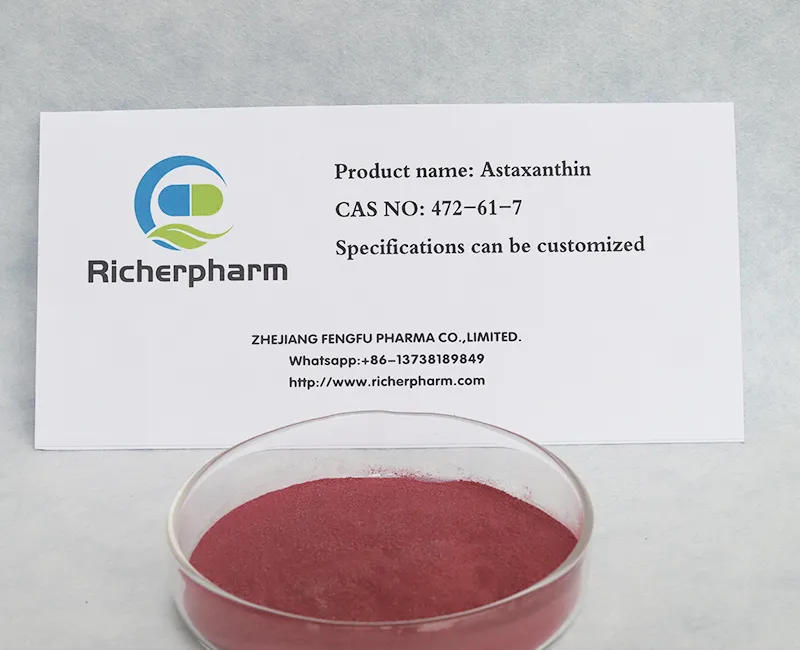
Product: Astaxanthin CAS 472-61-7
Alternative Name: Astaxanthin; CAS 472-61-7; 472-61-7; Haematococcus Extract; Natural red pigment; E161j
Send Inquiry
Download
Description
Technical Parameters
Astaxanthin (CAS 472-61-7) is a naturally occurring reddish pigment classified as a carotenoid. It belongs to a larger group of pigments known as xanthophylls. Astaxanthin is found in certain microorganisms, algae, and seafood. It is responsible for the pink or red color observed in various marine animals, such as salmon, shrimp, and lobsters.
Astaxanthin CAS 472-61-7
Product: Astaxanthin CAS 472-61-7
Alternative Name: Astaxanthin; CAS 472-61-7; 472-61-7; Haematococcus Extract; Natural red pigment; E161j
Astaxanthin has gained attention for its potent antioxidant properties. It is known to exhibit strong free radical scavenging activity, which helps protect cells and tissues from oxidative damage. As an antioxidant, astaxanthin is believed to have potential health benefits, including reducing inflammation, supporting cardiovascular health, promoting eye health, and enhancing skin health.
Astaxanthin is used in various industries, including food and beverages, dietary supplements, cosmetics, and animal feed. It is often extracted and produced from natural sources such as algae or synthesized through chemical processes.
1. Payment term
TT, LC
2. Delivery date
Negotiable
3. Market
Middle East / Africa / Asia / South America / Europe
4. Sample
Available
5. Executive standards
USP/EP
6. Qualification certificate
ISO9001; GB/T22000; HACCP; HALAL; KOSHER
7. Packaging size specification
Inner package: single-layer polyethylene bag and aluminum foil bag.
Outer package: fiber drum.
Packaging size: 25 kg/drum.
Our Advantage
We have branch offices in Dubai and India
we have own reliable & Long-term cooperative & experienced factory
Variety products for selection from China and India
We can customize according to your requirements
We can do OEM & ODM
We can offer N-1 to API
Astaxanthin CAS 472-61-7 FAQ
Q: What is Astaxanthin?
A: Astaxanthin is a naturally occurring pigment that belongs to the carotenoid family. It is found in certain algae, microorganisms, and seafood such as salmon, shrimp, and lobster. Astaxanthin is responsible for the pink or red color observed in these organisms.
Q: What are the benefits of Astaxanthin?
A: Astaxanthin is known for its potent antioxidant properties. It helps protect cells and tissues from oxidative damage caused by free radicals. Some potential benefits associated with astaxanthin include reducing inflammation, supporting cardiovascular health, promoting eye health, enhancing skin health, and supporting exercise performance and recovery. However, further research is needed to fully understand its effects.
Q: How is Astaxanthin obtained?
A: Astaxanthin can be obtained from natural sources such as algae, or it can be synthesized through chemical processes. Natural astaxanthin is typically extracted from algae, which are cultivated under controlled conditions, and then concentrated and purified to obtain the pigment.
Q: Is Astaxanthin safe to consume?
A: Astaxanthin is generally considered safe for consumption when taken within recommended doses. It is a naturally occurring compound found in various foods, and adverse effects are rare. However, as with any dietary supplement, it is advisable to follow the recommended dosage and consult with a healthcare professional before starting any new supplementation.
Q: In what forms is Astaxanthin available?
A: Astaxanthin is available in various forms, including capsules, softgels, tablets, powders, and as an ingredient in certain foods and beverages. The form and dosage may vary depending on the specific product and intended use.
Q: Can Astaxanthin be used topically?
A: Yes, Astaxanthin is also used in topical skincare products for its antioxidant and anti-inflammatory properties. It is believed to be beneficial for skin health, including reducing signs of aging and improving skin elasticity. However, individual results may vary, and it's always advisable to follow the usage instructions provided by the specific product.
Q: Are there any side effects or interactions associated with Astaxanthin?
A: Astaxanthin is generally well-tolerated, and side effects are rare. However, high doses may cause a temporary change in skin color, typically turning it slightly yellow or orange. As for interactions, it's best to consult with a healthcare professional if you are taking any medications or have any underlying health conditions to ensure there are no potential interactions.
Q: Can I obtain Astaxanthin from my diet alone?
A: Astaxanthin is found in certain seafood, particularly salmon, shrimp, and lobster. However, the natural dietary sources of astaxanthin may not provide sufficient amounts to experience its potential health benefits fully. Dietary supplements that contain astaxanthin can provide a concentrated and reliable source of this pigment.